Key Takeaways:
- Choose backsplash materials that are non porous, scratch resistant where needed and realistically maintainable for your cleaning habits.
- Let the backsplash complement cabinets, countertop, floors and ceiling so the overall look remains cohesive from every angle.
- Use lighter tones and reflective materials in tighter rooms, and reserve darker or patterned backsplashes for focal areas such as the island wall or stove zone.
Your kitchen backsplash works harder than it looks. It shields kitchen walls from splashes, grease and steam, while shaping the entire mood of the room and tying together cabinets, countertop and floors. In compact Singapore homes, this slim surface can completely change how spacious the kitchen feels.
Why backsplashes matter in Singapore homes
In BTO flats, resale HDBs, condos and landed properties, kitchens often double as social hubs and family classrooms. With so much happening in a tight space, a durable, heat resistant backsplash becomes essential near the stove, hood and pantry, helping your cooking space stay calm and composed even on hectic weeknights.
How Lemonfridge approaches kitchen design
At Lemonfridge Studio, we believe interiors should be a reflection of who you are. Every project balances tailored design, modern concepts and premium finishes so your backsplash material, grout lines and tiles don’t just look good—they support the way you live. Our portfolio of kitchen design ideas shows how carefully chosen surfaces can transform both new BTO units and older resale flats.
Planning your backsplash during home renovation
When you’re planning a broader home renovation journey, the backsplash shouldn’t be an afterthought. We review floorplans, HDB regulations and cooking routines first, then coordinate the wall finishes with your floors, hood position and overall theme. This ensures the backsplash supports the bigger renovation strategy, whether it’s a 2-room BTO upgrade or a more expansive 4-room HDB resale makeover.
Getting the height and proportions right
The ideal height of the backsplash for kitchen design depends on both practicality and style. Stopping at the base of the upper cabinets is common in many 4-room HDB kitchen layouts, but extending the tiles or glass to the ceiling can create a dramatic feature wall—especially in open-plan spaces. Taller surfaces protect more wall area from high temperatures and moisture, which is crucial behind the stove and any vertical panel detailing.
Installing after the countertop
Kitchen backsplashes should always install after the countertop has been fixed. This sequence allows a precise seal where the two surfaces meet, reducing the risk of water seeping behind and damaging the wall. It also ensures that slab-style quartz, tile backsplash runs and tempered glass panels align perfectly with your chosen kitchen counter top solution.
Coordinating with cabinets, floors and ceiling
A successful backsplash harmonises with cabinets, floors and even the painted ceiling. We look at your preferred color scheme, cabinet style and flooring finish—whether it’s stone-look tiles or warm wood—so the backsplash can complement them without fighting for attention. This coordination is particularly important in minimal kitchen concepts where every surface is carefully edited.
Choosing the right backsplash material
There’s no single “best” backsplash; the ideal choice depends on how you cook and how much regular cleaning you’re realistically willing to do. We compare different materials like ceramic tiles, glass, quartz, natural stone, stainless steel, laminates and wood, explaining how each surface responds to heat, moisture and daily use in a Singapore climate.
Ceramic tiles: timeless and cost-effective
For many homeowners, ceramic tiles remain a cost effective option that still looks refined. They come in different shapes, finishes and colours, so they can echo the Scandinavian warmth of a light-toned kitchen or the bold contrast of a black-and-white cooking zone. Tiles are durable and splash-friendly, but grout lines need more attention and regular cleaning to prevent stains and mould growth.
Subway tiles and traditional backsplashes
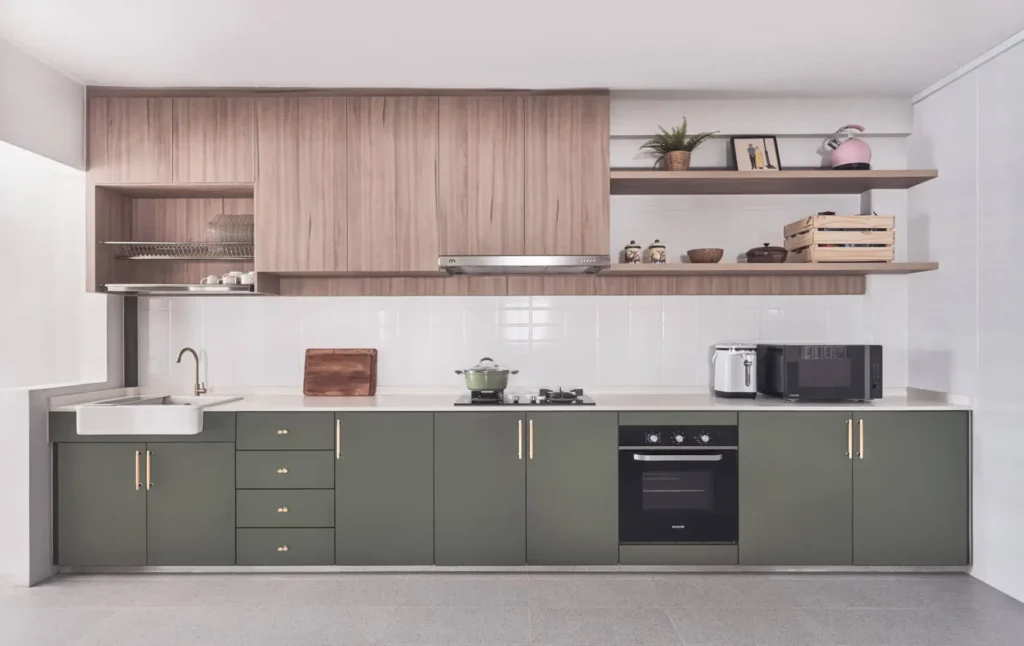
Subway tiles are a classic choice for a traditional backsplash. Their clean lines add character without overwhelming compact spaces. We often use them in modern colonial and minimalist interior settings where the backsplash quietly frames the cabinets and hood while keeping the overall look calm.
Glass backsplash: sleek, seamless and increasingly popular
A glass backsplash offers a near seamless look with very few grout lines, which makes cleaning quick and easy. This option is increasingly popular in small kitchen designs because the reflective glass surface helps reflect light and visually enlarge the room. A coloured or printed panel behind the stove can provide a focal point without adding visual clutter.
For more design inspiration and project showcases, follow Lemonfridge Studio on Instagram.
Tempered glass for performance and safety
We usually specify tempered glass, which is more heat resistant and impact resistant than standard glass. It pairs well with high temperatures near the hob and can handle daily cooking splashes when correctly installed. Being non porous, it won’t absorb stains or odours, so wiping the surface after each heavy cooking session is usually enough to keep it pristine.
Playing with colour and light using glass
Because glass can be back-painted, it’s perfect for bolder hues—deep greens, navy blues or warm terracotta—that add character while still cleaning easily. In some open kitchen concept layouts, we extend the glass behind a peninsula or kitchen island to create continuity with the dining area and subtly add depth to the space.
Quartz backsplash and engineered slabs
A quartz backsplash that continues from the quartz countertop creates a luxurious yet practical backdrop. Quartz is non porous, highly stain resistant and easier to maintain than many natural stone surfaces. Slab-style quartz backsplashes virtually remove grout lines, making them ideal for busy families who want a clean, streamlined aesthetic in both wet and dry kitchen zones.
Natural stone, marble and granite
If you’re chasing a one of a kind statement, natural stone backsplashes in marble or granite can be stunning. Their organic veining can flow up from the countertop to the wall, creating a beautifully continuous surface. In refined modern-contemporary interiors, marble behind the stove and hood becomes a piece of art, while granite offers tougher resistance to scratches and heat. Sealing is essential to keep these materials resistant to staining and mould growth.
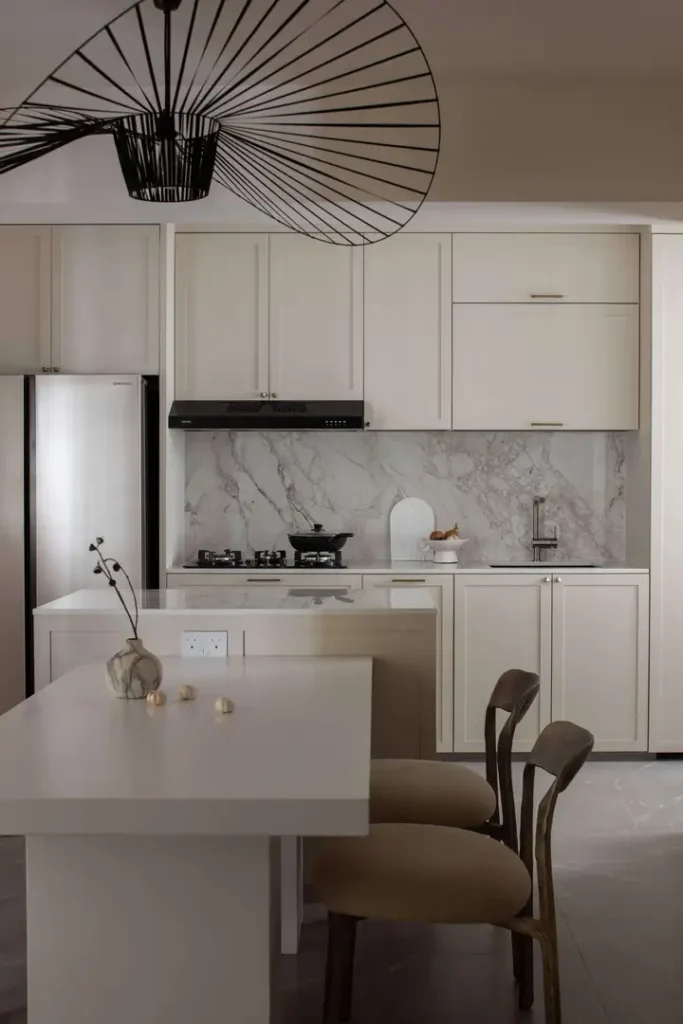
Stainless steel for a professional edge
A stainless steel backsplash channels a professional kitchen vibe. It’s resistant to heat, water and stains and pairs well with darker cabinets or concrete-look floors. We like using it behind the main stove in heavy-use kitchens, then softening the room with warmer materials—like wood and painted walls—on the surrounding surfaces.
Wood and laminates as warm accents
Wood panelling or wood-look laminates can add warmth and texture, especially in Muji-inspired spaces or wabi-sabi-influenced kitchens. These materials must be sealed thoroughly to remain resistant to moisture and heat, so we usually keep them away from the most intense cooking zones. Laminates can imitate solid timber beautifully, but as they’re not truly heat resistant, we often pair them with tiles or glass behind the hob.
Mixing different materials for visual interest
Some of our favourite kitchens blend different materials: perhaps glass behind the sink, quartz around the main cooking space and ceramic tiles near a dry kitchen counter. This approach lets us manage budget, add character and tailor functionality. It’s particularly effective in homes where a dedicated dry kitchen design sits beside a hardworking wet zone.
Working with tiles and grout lines
Whether you choose porcelain, zellige or ceramic, grout lines are where dirt and grease tend to settle. Larger format tiles reduce the number of joints, making the backsplash easier to clean. We recommend regular cleaning with gentle products and periodic deep cleaning to prevent discoloration or mould growth, especially in humid Singapore kitchens.
Pattern, shape and texture
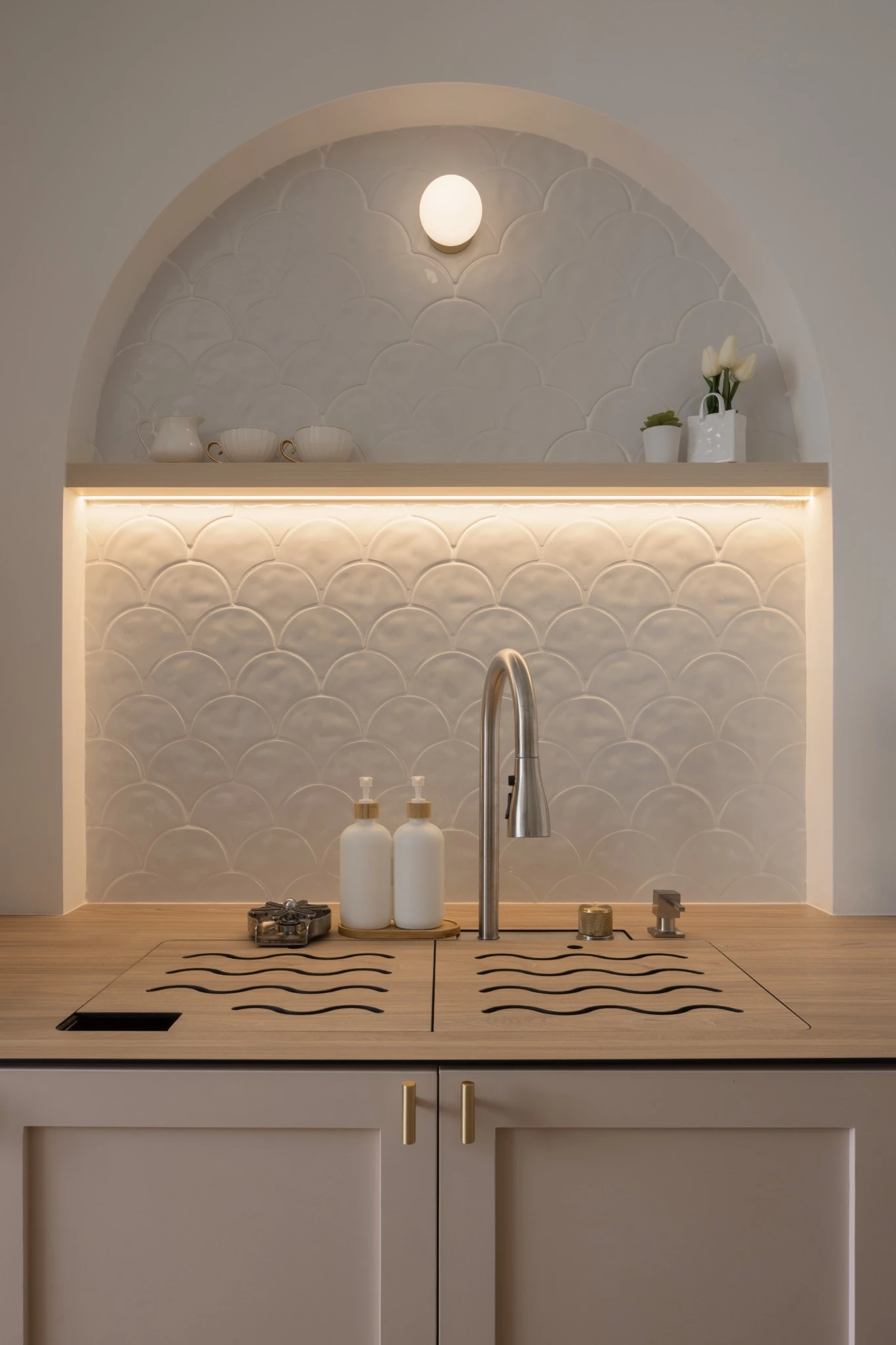
We often experiment with different shapes—slim herringbone planks, hexagons or softly irregular zellige tiles—to add texture and depth. Using two types of tile backsplash can help section off zones: one pattern around the kitchen island feature and another for the main wall, for example. In Japandi-inspired designs, subtle variations in tone and texture keep the aesthetic calm yet rich.
Colour strategy: light versus dark
Lighter tones in glass, tiles or quartz can make a compact room feel bigger, especially in 2-room BTO layouts where renovation cost is a key concern. Dark colours can be beautiful too—ink blue, deep green or charcoal stone used sparingly as a focal wall adds sophistication without overwhelming the space. In many minimal kitchen projects, we keep most surfaces pale and reserve dark shades for one dramatic backsplash run.
Designing for different home types
For new BTO owners, our guides on 3-room flat transformations and 4-room BTO renovation planning show how a well-chosen backsplash can elevate standard HDB layouts. Resale owners often pair their kitchen update with bathroom renovation works so tiles, metals and colour palettes flow naturally throughout the house.
Open kitchens, islands and social spaces
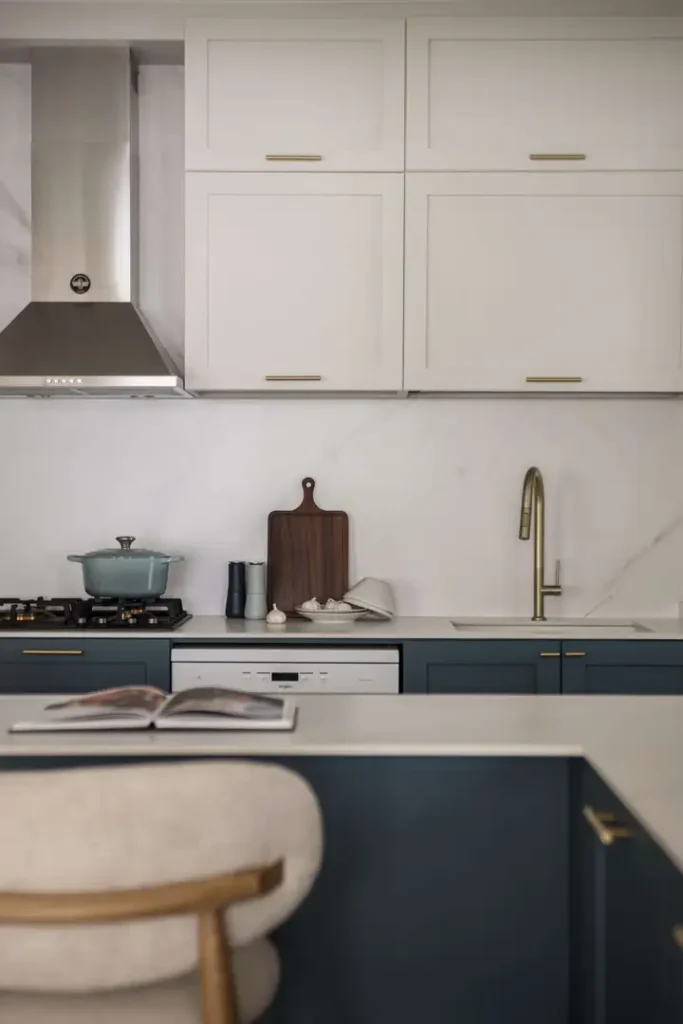
In open-plan homes, the backsplash must work from every angle. When a kitchen island becomes the social hub, we often echo the island’s quartz or marble on the wall behind the stove, or run the same material up to the ceiling to frame the hood. This creates a seamless look from living room to dining area, especially in Scandinavian-inspired homes.
Smart-home integration along the backsplash line
Modern kitchens increasingly integrate technology. Along the backsplash, we discreetly hide power tracks, under-cabinet lighting and smart lights controlled by smart switches and a complete smart-home ecosystem. These upgrades, together with smart locks at the main door, keep the space practical and future-ready without cluttering the walls.
Cleaning routines that keep surfaces fresh
Whatever material you choose, regular cleaning is essential. Wiping down the backsplash after heavy cooking—or at least once a week—prevents grease from settling into grout lines and textured surfaces. Glass, quartz and stainless steel will usually need just mild detergent, while natural stone benefits from pH-neutral cleaners and a resealing schedule to maintain its resistant properties.
Pre-renovation checks and timing
Before installing a new backsplash, we recommend a thorough HDB defect check for new units to ensure walls and surfaces are ready. Coordinating with your HDB renovation timing also helps avoid delays, especially when you’re combining kitchen work with other renovation ideas across the home. Our renovation team handles scheduling so your installation runs smoothly from surface prep to final grout.
Style inspiration beyond the kitchen
A backsplash shouldn’t feel disconnected from the rest of the house. That’s why we cross-reference palettes from modern colonial schemes, modern contemporary spaces, Scandinavian-inspired rooms and more. When the kitchen walls echo tones from the living room or bedroom, your decor feels cohesive and intentional.
Renovation support from start to finish
Lemonfridge doesn’t only design; we guide you through the full renovation process—from early budgeting for a 2-room upgrade to styling a finished 4-room HDB. Our experienced team coordinates tilers, quartz fabricators and glass installers so every surface aligns, from floors to backsplash.
When your dream kitchen finally comes together
Whether you’re planning a compact 4-room HDB kitchen refresh or a larger landed-home overhaul, a well-designed backsplash can quietly turn everyday routines into a pleasure. For more ideas, explore our kitchen renovation services in Singapore, browse additional kitchen renovation inspiration and design stories for Singapore homes.
Ready to create a tailored kitchen with Lemonfridge?
If you’re planning a new build, a BTO key collection or a resale transformation, our designers are ready to help—from kitchen-focused concepts to whole-home schemes that include bathroom upgrades and more. Visit our main Lemonfridge page to discover how we can redefine the art of living in your home, one carefully crafted backsplash at a time.
FAQ
What is a backsplash in a kitchen?
A backsplash is the protective surface on the wall above the countertop, usually behind the stove and sink. Its main job is to shield the wall from grease, water, food splatter and heat so the kitchen is easier to clean and the paint or plaster doesn’t get damaged.
Is it better to have a backsplash or no backsplash in the kitchen?
In most modern kitchens, having a backsplash is strongly recommended. It prevents stains, moisture damage and frequent repainting, and gives you a durable, wipeable surface in the messiest zones.
At Lemonfridge, we treat the backsplash as a must-have layer of protection that also completes the overall design.
What is the best type of backsplash for a kitchen?
There isn’t one single “best” type; the right choice depends on how you cook and how much maintenance you’re happy with. For most Singapore homes, a practical short-list is quartz or other engineered stone slabs, ceramic or porcelain tiles, and tempered glass, as they’re durable, heat-resistant and fairly easy to clean.
Lemonfridge usually recommends short-listed options after understanding your lifestyle, budget and style preferences.
What is the best material for a backsplash?
If you want something very low-maintenance, quartz and high-quality porcelain slabs are excellent because they’re non-porous, stain resistant and can be installed in large pieces with minimal grout.
For more texture or character, natural stone, ceramic tile and handmade tile are also great, but they need a bit more care and, in some cases, sealing.
What is the most popular kitchen backsplash right now?
Tile still leads overall, especially ceramic and porcelain tiles in simple patterns like subway, stacked or herringbone layouts.
At the same time, full-height quartz or stone slabs are growing quickly in popularity for higher-end kitchens because they give a seamless, luxurious look with fewer grout lines..
Should the backsplash be lighter or darker than the countertop?
There’s no strict rule, but most designers choose whichever option gives the right contrast and keeps the kitchen feeling balanced. Lighter backsplashes help small or low-light kitchens feel more open because they bounce light around, while darker ones add drama but can make a space feel smaller if overused.
At Lemonfridge, we usually let the countertop be the “hero” and then pick a backsplash that either gently contrasts or tones with it, depending on the mood you want.
What to use for a backsplash instead of tile?
If you prefer not to use tiles, good alternatives include quartz or other stone slabs, tempered glass, stainless steel, acrylic panels and high-performance laminates. These materials give a smoother, often more seamless look with fewer joints, and some can run all the way to the ceiling for a clean, modern finish.
Is it cheaper to tile or splashback?
Standard ceramic or porcelain tile is generally cheaper per square metre than custom glass or engineered stone splashback panels, though the total cost depends on tile choice and labour.
If budget is tight, a well-planned tiled backsplash is usually the most economical option; Lemonfridge can help you choose tile sizes and layouts that still look premium without overspending.