Key Takeaways:
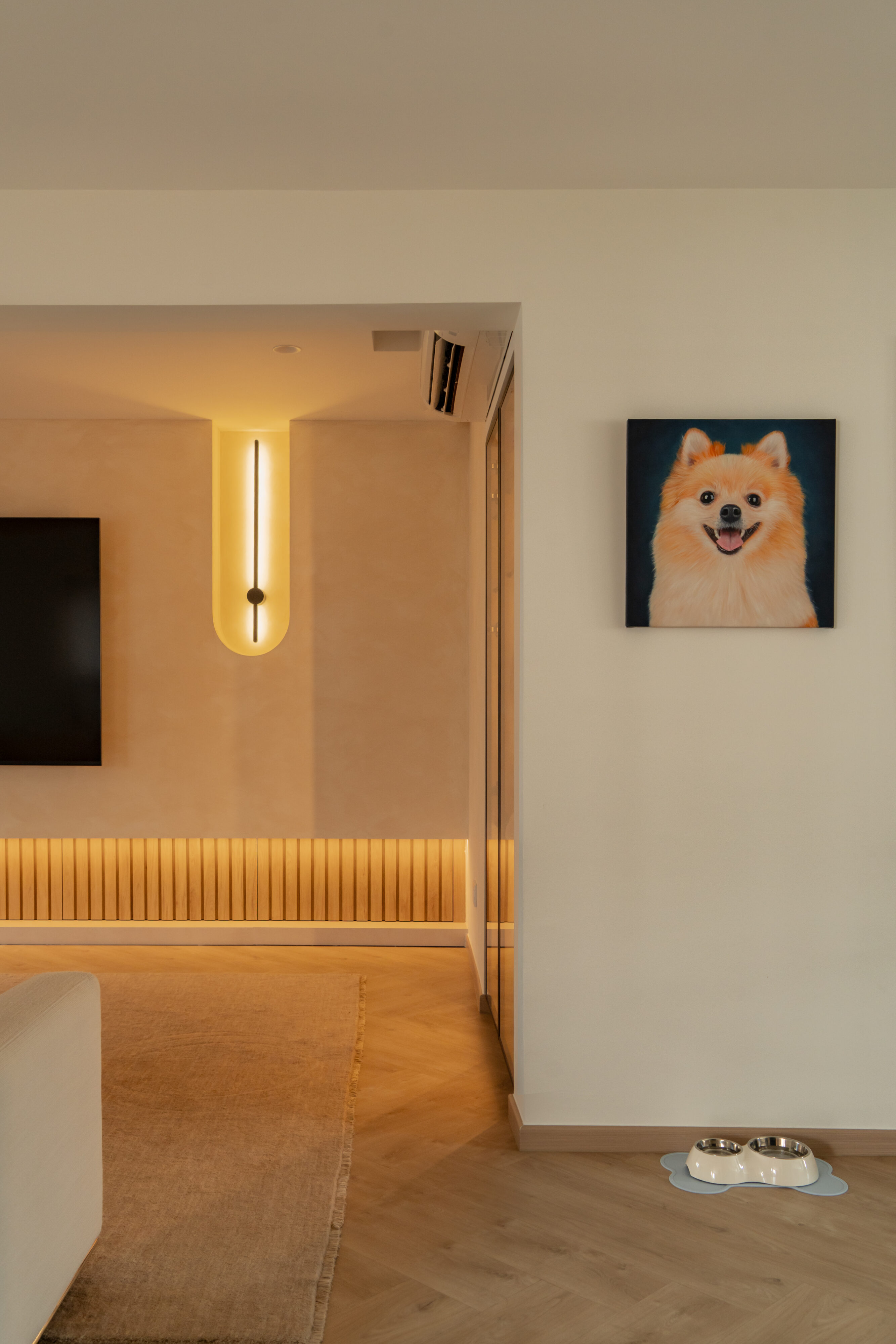
- Invest in layers of light. A single ceiling fixture rarely flatters a small space; layered lighting makes the whole flat feel premium.
- Edit first, design second. Decluttering is the fastest way to create more space in a 3 room hdb—and keep it that way.
- Use glass strategically. Glass panels (and mirrors) keep zones defined without shrinking the home.

A 3 room hdb can feel like the sweet spot in Singapore: two bedrooms, a practical living room, and a dining area that still feels like a “real home” under one roof. At Lemonfridge Studio, we redefine the art of living through tailored designs, modern concepts, and premium finishes; crafted just for you by our expert design team—because we believe interiors should be a reflection of who you are.
In a compact flat layout, the goal isn’t to chase unrealistic square footage. It’s to create an interior that reads calm, curated, and quietly luxurious—where every room earns its place, and the space feel is effortless.
What you can realistically do in a 3 room hdb
The flat layout, in plain English
A typical 3 room hdb usually includes two bedroom spaces, combined living and dining areas, a kitchen, and two bathroom zones in many layouts—often with a household shelter (or storeroom). The overall size commonly sits around 60 to 65 square metres.
Why it stays a popular choice
For couples, singles, and small families, a 3 room plan balances cost and comfort—enough room to host, work, and rest without maintaining a large house. With the right interior design decisions, a small home can still feel genuinely spacious.
First, measure the space before you design it
60–65 sqm doesn’t mean “small”; it means “intentional”
When you know your true floor area, design gets easier: circulation routes, storage depth, and door swings become clear. This also helps you decide whether to keep your existing walls or selectively replace walls for an open concept layout that improves sightlines and light.
If you’re starting from a new unit, align your planning with a BTO approach—our guide to premium planning for compact flats can help you map priorities early (see how we approach smaller-unit transformations here: our BTO-focused planning insights).
Permits, planning, and the renovation timeline
What typically needs HDB approval
Most major renovation works—especially anything affecting structure, wet areas, windows, or services—require approval before work starts. We treat permits as part of the design process, not an afterthought, so your renovation stays smooth and compliant.
If you want a practical planning framework, you can also reference our timeline guide for Singapore homeowners: our renovation timing playbook.
How long a resale 3 room hdb renovation really takes
A resale 3 room hdb renovation is often more involved—rectification, rewiring, re-tiling, carpentry, and paint coordination add up. For complete overhauls, it’s common to plan for 12 to 16 weeks so each trade can sequence properly and finishes cure well.
Before that, we also recommend a structured handover review—especially for newer flats—using a defects checklist like: our defects-check guide.
For more design inspiration and project showcases, follow Lemonfridge Studio on Instagram.
Budgeting for premium finishes without surprise bills
A sensible range for renovation costs
Renovation costs for a 3 room hdb vary widely depending on the extent of works, carpentry scale, and material choices. As a practical guide, MoneySmart estimates 3-room BTO renovation costs around S$25k–S$45k, while resale HDB projects often sit higher (e.g., S$50k–S$90k)—with premium scopes potentially going beyond that when you add extensive hacking, custom millwork, or premium stone.
Where premium spending pays off
In a small space, spend where you touch and see things daily: kitchen hardware, countertop durability, wardrobe internals, bathroom waterproofing, and lighting quality. For a full-scope consultation, you can explore our end-to-end approach here: our renovation service process.
Make the living room earn its keep
Plan a focal point that isn’t bulky
Your living room becomes the social centre—so it needs presence without heaviness. A slim console, a low-profile sofa (open legs help), and a single statement artwork can create a clear focal point without eating the walkway.
The tv feature wall, refined and practical
A tv feature wall works best when it’s more than decoration: hidden routing, ventilated niches, and integrated storage keep cables invisible and the composition elegant. Add subtle texture (timber slats, micro-cement, or a calm laminate) for visual interest—not visual noise.
Design the dining area as a flexible zone
Right-sizing the dining room for everyday life
In a 3 room hdb design, a formal oversized set often makes the unit feel tight. Consider a small table that expands only when you host, paired with slim dining chairs that tuck neatly under.
Zone with light, not walls
Instead of adding partitions, use layered light: a soft pendant above the dining area and gentle wall-wash lighting along the circulation path. It supports an open layout and encourages a seamless flow from entry to living.
For more premium-friendly design ideas, you can browse: our curated renovation inspiration library.
Open concept kitchen strategies that still feel calm
When to replace walls, and when not to
An open concept kitchen can make a 3 room hdb feel larger—especially when it improves sightlines from entry to living. But not every wall should go. We often keep a low boundary (half-wall, island, or concealed tall unit) to control odours and keep a clean visual frame.
Glass panels and folding doors for a kitchen that breathes
If you love openness but want control, glass panels are your best friend. A fixed glass screen keeps the view open, while sliding systems or folding doors allow flexibility when cooking. Used well, glass panels help maintain the illusion of more space and allow natural light to travel deeper into the interior.
Integrated appliances for a clutter free look
Integrated ovens, concealed bins, and built-in fridges keep the kitchen quiet and cohesive—especially in an open concept layout where the kitchen is always on display. The result is a clutter free impression even when you’re living normally.
Storage that protects your “more space” feeling
Use vertical space like it’s part of the architecture
In compact flats, vertical space is not optional—it’s where calm comes from. Full-height cabinets, floating shelves, and clean-lined joinery draw the eye upward and free up the floor for circulation. This is also where a 3 room hdb can feel unexpectedly spacious.

Built-ins around the household shelter
The household shelter is often unavoidable—so we design around it. A seamless wall of cabinetry can visually “disappear” the shelter door, while creating hidden storage for seasonal items, linens, and luggage. This is one of the fastest ways to reduce clutter in a small home.
Light, dark, and the illusion of room
How light colours expand visual space
Light tones—whites, beiges, soft greys—reflect more ambient light and can make a 3 room hdb feel airy. With sheer curtains, you maximise daylight while keeping privacy, especially if you’re lucky enough to have large windows.
When darker walls make a home feel cosy
Darker walls aren’t the enemy—used sparingly, they create depth and a more intimate, hotel-like mood. In a bedroom or TV zone, a controlled dark palette can feel intentional and elegant, rather than heavy.
Mirrors, glass panels, and the illusion of more space
Strategically placed mirrors bounce brightness and stretch sightlines; combined with glass panels, you strengthen that sense of illusion without resorting to gimmicks. Done right, this is how a compact home gets that polished, gallery-like visual space.
Master bedroom comfort, without wasted centimetres
Bed placement and storage-led carpentry
In the master bedroom, the bed should anchor the room, not fight it. We often prefer a clean headboard wall, slim side tables, and wardrobe doors that don’t interrupt walk paths. Storage-integrated bedframes (drawers or lift-up) are a practical combination of function and calm.

Bathroom considerations in compact bedrooms
When the ensuite is close, details matter: quiet ventilation, slip-resistant flooring, and seamless waterproofing. If you’re planning a complete refresh, you can explore our specialist approach here: our bathroom renovation expertise.
Style directions that suit a 3 room hdb
Scandinavian warmth with wooden elements
Scandinavian interior design works beautifully in a 3 room hdb because it prioritises function, bright surfaces, and warm wooden elements. If you’re considering a refined Scandi direction, explore our resources on Scandi solutions for HDB living and our broader Scandinavian design philosophy.
Minimalist, Japandi, and warm minimalism
Minimalist homes keep only what you need—clean lines, neutral surfaces, and intentional elements. If you like restraint with comfort, browse our take on modern minimalist living and the serenity of Japandi’s quiet luxury.
Modern colonial, contemporary, and other themes
For homeowners who want detail without clutter, modern colonial can deliver character in a controlled way—see our perspective on heritage-meets-modern elegance. If you prefer crisp silhouettes and premium finishes, you may also enjoy our modern contemporary direction.
And yes—modern mid-century, industrial interior design, and even a warehouse design theme can work in a 3 room hdb, as long as proportions and lighting are handled with care.
2026 upgrades: premium, liveable, and trend-aware
Texture-forward walls and calm character
We’re seeing more limewash-like textures and soft plaster looks that add depth without adding clutter. If you like imperfection with intention, our wabi-sabi perspective is a good starting point. For ultra-clean calm, you might prefer the quiet practicality of Muji-inspired living.
Biophilic touches and natural light that actually matters
Plants, natural fibres, and stone-like finishes bring a grounded style—and they work especially well when paired with strong daylight. There’s also evidence that improving natural lighting in homes can positively affect emotional wellbeing.
Smart home layers that disappear
In 2026, “smart” should feel invisible: scene-based lighting, quiet automation, and clean hardware. Start with a system-level view via our smart home guide, then refine with smart lights, smart switches, and smart locks. It goes a long way toward making daily routines feel effortless.
Ready to shape a home that reflects you?
If you want a 3 room hdb that feels polished, personal, and truly liveable, we’d love to help. Begin with our homepage to explore how we create tailored interiors—or browse our work as the following design portfolio reference point before you commit.
And if you’re comparing approaches, our other articles are designed to help you decide with confidence—because great interior design isn’t just about looks; it’s about building a home you’ll still love years from now.
FAQ
How much is a 3-, 4- and 5-room HDB flat renovation in 2026?
For 2025, a practical budgeting range many Singapore homeowners use is:
- 3-room HDB: about S$20k–S$60k
- 4-room HDB: about S$30k–S$70k
- 5-room HDB: about S$40k–S$90k
Your final cost swings mainly with BTO vs resale condition, hacking, carpentry quantity, and finish level.
How much to paint a 3-room HDB flat?
A typical full-home repaint for a 3-room HDB is usually around S$600–S$1,100, depending on paint type, prep/patching, and whether ceilings/doors are included.
Who can buy a 3-room BTO?
In general, a 3-room BTO is usually for applicants forming a family nucleus (e.g., married/engaged couples, families), and you must meet BTO eligibility requirements (e.g., citizenship and other criteria).
Some singles can apply for 3-room BTO/SBF only under specific pathways like the Joint Singles Scheme, where applicable.
How much does a 3-room BTO renovation cost?
For a 3-room BTO, a straightforward, move-in-ready renovation is often budgeted around S$25k–S$45k. If you’re doing heavier carpentry, premium finishes, or extensive rewiring, it can push higher.
What is the size of a 3-room BTO?
A 3-room flat is commonly around the 60–65 sqm range, and some projects list about 65 sqm internal (with about 68 sqm when including the air-con ledge). Exact size varies by project and era.
Is a 3-room flat too small?
Not necessarily. A 3-room flat is a popular choice for couples, singles, and small families—it depends on your routine (WFH needs, storage habits, kids, hosting). If the layout is planned well, it can feel comfortably spacious for day-to-day living.
How much does it cost to renovate a 3-room HDB flat?
As a quick rule of thumb:
- BTO 3-room: often S$25k–S$45k for a clean, modern scope
- Resale 3-room: commonly higher due to repair/hacking/upgrading needs, frequently S$40k–S$60k+
Final cost depends on condition and how premium you go on carpentry, fittings, and finishes.
How to make a 3-room flat bigger?
A few high-impact moves:
- Open up sightlines (where permitted) to connect living and dining zones
- Use built-in, full-height storage to clear floor area
- Choose lighter finishes and reflective surfaces to brighten the home
- Keep furniture slim and multifunctional (storage bed, extendable dining, benches)
- Declutter ruthlessly—it’s the fastest “extra space” you’ll ever get
If you want, Lemonfridge can advise what’s feasible for your specific layout (including what you can’t hack) and map a renovation scope that fits your budget while still feeling premium.