Key Takeaways:
- Warm Minimalism Dominates: Singapore homeowners prefer warm, comfortable spaces over cold minimalist designs.
- Function Comes First: Space efficiency and humidity-resistant materials are critical for long-lasting homes.
- Timeless Beats Trendy: Build around classic styles and use décor to incorporate changing trends.
Choosing interior design styles for your Singapore home is one of the most important decisions you’ll make, and often one of the most overwhelming. With dozens of styles floating around Pinterest, Instagram, and design blogs, it’s easy to fall in love with a look that isn’t right for your space, your climate, or your lifestyle.
At Lemonfridge Studio, we’ve helped hundreds of homeowners in Singapore navigate exactly this challenge. This guide covers every major interior design styles popular in Singapore right now, who each one suits best, and what it actually costs to pull off — so you can walk into your renovation with clarity instead of confusion.
Why Interior Design Style Matters More Than You Think
A lot of homeowners treat style as the last thing to decide — something you sort out after choosing a contractor. That’s a costly mistake.
Locking in a clear design direction early prevents expensive mid-renovation changes, helps your interior designer source materials efficiently, and ensures your home feels cohesive rather than patched together. More importantly, the right style shapes how your home feels to live in every single day.
In Singapore, two practical realities shape every design decision:
Space. In Singapore, most homeowners live in HDB flats ranging from 60 to 110 sqm, which means every square foot must work hard. As a result, a style that looks beautiful in a 200 sqm New York loft can feel suffocating in a typical 4-room HDB.
Climate. Moreover, Singapore’s heat and humidity eliminate certain materials outright. For example, solid hardwood can warp over time, while real marble may stain and absorb moisture. Therefore, the right style must take durability into account, not just aesthetics.
With those two filters in mind, here’s everything you need to know.
The 7 Most Popular Interior Design Styles in Singapore (2026)
1. Modern Contemporary
Best for: HDB flats (3-room to 5-room), BTO units, condominiums Renovation cost range: $40,000 – $80,000
Modern Contemporary is Singapore’s most enduring design style — and for good reason. It doesn’t chase trends. It adapts to them.
Rather than a fixed aesthetic, Modern Contemporary is a flexible foundation built on clean lines, neutral colour palettes, and functional furniture. It evolves quietly over time, incorporating current elements while staying grounded in simplicity. For first-time homeowners who are still discovering their taste, this style offers a safe, liveable starting point that won’t feel dated in five years.
Key characteristics:
- Neutral base tones: warm whites, soft greys, greige
- Clean-lined furniture without heavy ornamentation
- Smart built-in storage that disappears into walls
- Open-concept layouts with deliberate zoning using rugs or lighting
- Mix of textures — matte, wood grain, soft linen — to add depth without clutter
However, what you need to watch out for is that, without careful material selection, Modern Contemporary can feel generic. Ultimately, the difference between a forgettable home and a beautiful one comes down to the quality of finishes and intentional details, rather than dramatic gestures.
2. Warm Minimalism
Best for: Condominiums, resale HDB flats, homeowners who love calm spaces Renovation cost range: $45,000 – $85,000
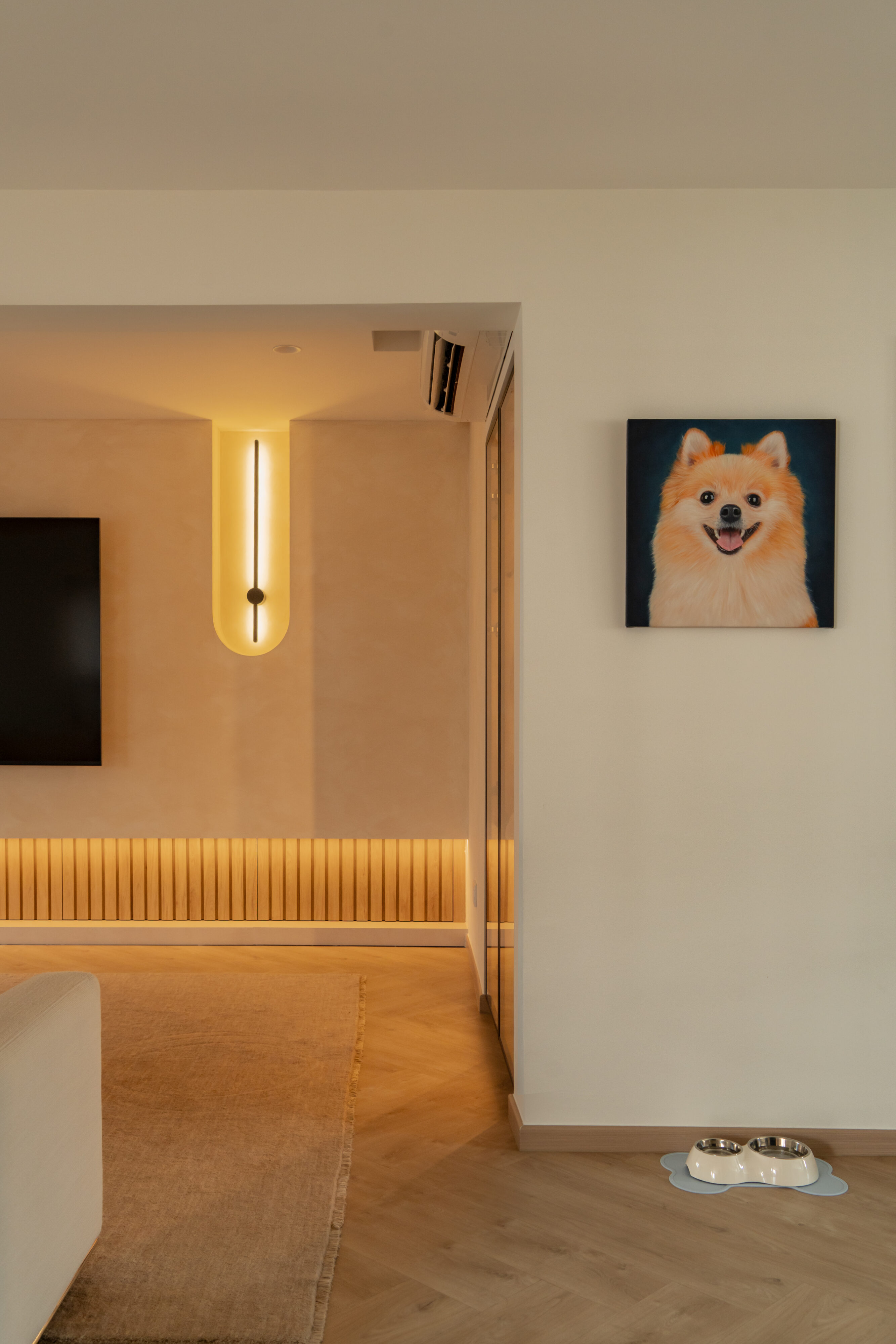
Warm Minimalism is the defining interior design style of 2026 in Singapore. It’s what happens when traditional minimalism grows up — shedding the cold, sterile aesthetic of the past decade and replacing it with something that actually feels like home. This style emphasises softness and restraint rather than stark minimalism.
The core principle is simple: edit ruthlessly, but make what remains feel soft, textured, and inviting. To achieve this, incorporate light oak furniture, linen upholstery, woven rattan details, ceramic accessories, and earthy tones such as terracotta, clay, and warm sand. Together, these elements create spaces that feel uncluttered yet comfortable and welcoming.
Key characteristics:
- Pared-back layouts with maximum breathing room
- Earthy neutrals: oat, creamy whites, warm sand, clay, sage green, caramel
- Natural textures layered throughout — wood, linen, stone, ceramic
- Statement pieces used sparingly, but deliberately
- Soft, diffused lighting rather than harsh overhead fixtures
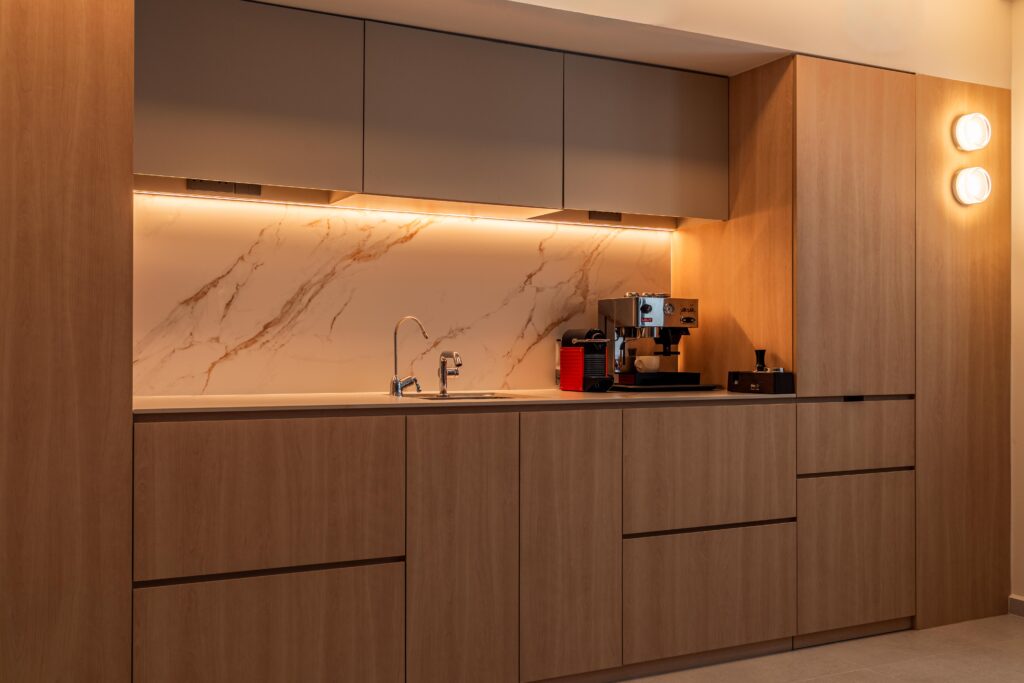
What to watch out for: Warm Minimalism looks effortless but requires precise coordination. Mismatched undertones (a cool grey next to warm oak, for instance) can undermine the entire palette, and that’s often the moment neutrals start to feel flat without enough texture or tonal variation. bold colours can also overwhelm the look if overused. Work with a designer who understands colour temperature. Some of the most common mistakes are confusing emptiness with warmth or neglecting texture altogether.
3. Japandi
Best for: Homeowners who value calm, intentional living; works well in all property types Renovation cost range:$50,000 – $90,000
Japandi — a fusion of Japanese minimalism and Scandinavian cosiness — has grown from a niche aesthetic to one of Singapore’s most popular design themes, and it shows no sign of fading.
In a city as fast-paced as Singapore, Japandi speaks directly to a need many homeowners feel but struggle to articulate: I want to come home and feel calm. The style achieves this through restraint. Every element has a purpose. Every material is chosen for how it feels, not just how it looks. Clutter is not just avoided — it’s philosophically rejected.
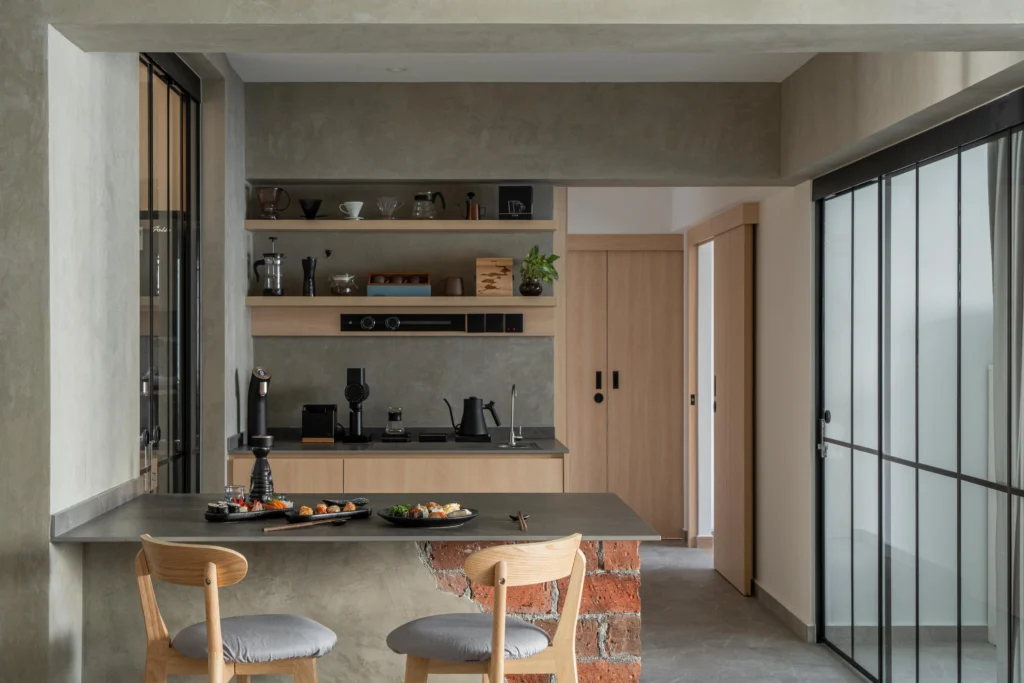
On one hand, the Japanese side brings wabi-sabi (the beauty of imperfection), natural wood tones, and quiet thoughtfulness. On the other hand, the Scandinavian side brings functionality, hygge (cosiness), and practicality, often through multi-functional furniture that improves space efficiency. Together, these influences create spaces that feel both calming and highly livable.
Key characteristics:
- Muted palette: beige, cream, taupe, warm grey, muted sage
- Low-profile furniture with clean, considered lines
- Natural materials: solid timber, handmade ceramics, linen, cotton, wool
- Visible craftsmanship — joinery details, timber grain, handmade textures
- No decorative excess; every object earns its place
What to watch out for: Japandi is deceptively difficult to execute. Poor material choices or inconsistent tones quickly disrupt the harmony. It’s a style that rewards thoughtful space planning and penalises shortcuts.
4. Quiet Luxury
Best for: Condominiums, landed homes, larger resale flats Renovation cost range: $70,000 – $150,000+
Quiet Luxury is the evolution of high-end interior design style for 2025–2026. Instead of flashy finishes, visible logos, and overt opulence, it embraces a more refined approach. Rather, it focuses on exceptional materials, flawless craftsmanship, and a home that announces its quality only to those who know what to look for.
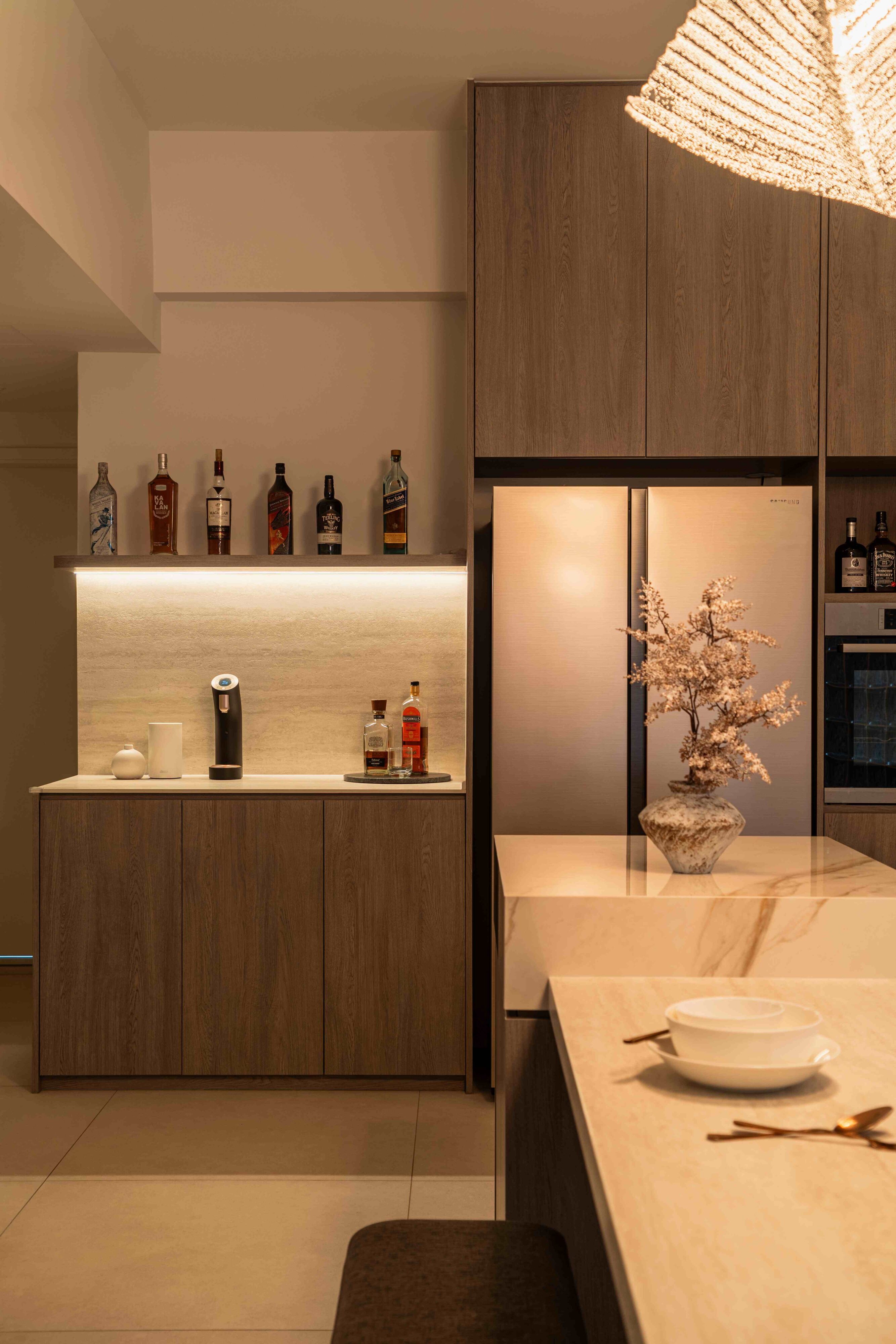
In Singapore, this translates to fluted wall panels in muted tones, brushed brass hardware, floor-to-ceiling joinery that blends seamlessly into walls, rich but understated fabrics like bouclé and cashmere, and furniture with architectural presence rather than decorative noise.
This is not a budget-friendly style. Quiet Luxury lives or dies by material quality. But for homeowners who want a home that feels genuinely elevated — not just aesthetically aspirational — it delivers.
Key characteristics:
- Tonal interiors: one or two colours pulled through an entire space
- Premium materials: travertine, fluted oak, brushed metals, engineered marble
- Bespoke carpentry with concealed handles and flush detailing
- Layered, atmospheric lighting (sconces, recessed, pendant — never just downlights)
- Fewer, larger pieces of high-quality furniture
What to watch out for: Executed poorly, Quiet Luxury can feel cold or underwhelming. The entire effect depends on consistency — one cheap element can undercut everything around it.
5. Japandi-Scandinavian / Modern Scandinavian for HDB Flats
Best for: Young families, first-time homeowners, BTO flats Renovation cost range: $35,000 – $65,000
If Japandi feels too restrained and Modern Contemporary feels too generic, Modern Scandinavian interior design is often the right middle ground. It’s practical, broadly appealing, and naturally suited to Singapore’s compact living conditions, with space optimization as a core advantage in smaller homes.
Visually, the hallmarks of this style are light and warmth. For instance, light ash or oak joinery, linen soft furnishings, and organic curves in furniture help create a softer, more inviting atmosphere. In addition, large windows or sheer curtains maximise natural light, while soft colours such as oat, warm white, and soft sage make small rooms feel larger and more open.
Modern Scandinavian also photographs beautifully, which matters if you’re eventually looking to sell. Buyers respond to its brightness and open, welcoming feel.
Key characteristics:
- Light wood tones (ash, birch, blonde oak)
- Soft, warm whites and natural neutrals
- Organic shapes in furniture and accessories
- Layered natural textures: cotton, jute, rattan, wool
- Functional built-in storage in light finishes, with custom built-in solutions tailored to flat layouts
These homes also often use transformable furniture so one room can serve multiple purposes, with options like Murphy beds and foldable desks.
What to watch out for: Without the right material quality, Scandinavian can feel flat or Ikea-like. The key is investing in a few quality pieces — a good sofa, real wood joinery, solid hardware, and built-in pieces like study nooks or shoe cabinets — rather than trying to fill every corner cheaply.
6. Biophilic Design
Best for: Homeowners prioritising wellbeing; works well as an overlay on any style Renovation cost range: Varies — biophilic elements can be added to most budgets
Biophilic design is not a style in the traditional sense — it’s a philosophy that can be layered over almost any aesthetic, echoing many of the interior design trends emerging in Singapore homes. The principle is simple: bring nature into the home, because humans are hardwired to feel calmer, healthier, and more creative in natural environments.
In recent years, biophilic design in Singapore has evolved from a premium feature into a mainstream expectation. Whereas clients once asked for “a plant or two,” many are now seeking indoor gardens, living walls, and material choices that foster a stronger connection to the natural world.
Key characteristics:
- Indoor plants as design elements, not afterthoughts — from trailing pothos to statement fiddle-leaf figs
- Natural materials throughout: real wood, stone, rattan, bamboo, clay
- Maximised natural light via sheer curtains, skylights, open layouts
- Earthy tones and organic shapes that reference nature
- Water features or natural soundscapes for sensory connection
What to watch out for: Singapore’s humidity is both an asset and a challenge. Some indoor plants thrive; others struggle without airflow. Work with your designer to choose plant species suited to your space’s light and ventilation conditions.
7. Peranakan-Inspired / Heritage Modern
Best for: Homeowners wanting a uniquely Singaporean identity; resale HDB, landed homes Renovation cost range:$55,000 – $100,000+
As a result of this shift, Singapore’s design scene has matured, and more homeowners are seeking interiors that feel distinctly local, reflecting a growing reaction against the globalized minimalism that dominated the past decade. In this context, Peranakan-inspired design, or Heritage Modern, offers exactly that.
This style doesn’t mean covering every surface in traditional motifs. Instead, it weaves heritage details — Peranakan tiles, traditional grillework, rattan panels — into a modern framework. The result is a home that feels warm, layered, and unmistakably Singaporean.
Key characteristics:
- Peranakan encaustic tiles used as kitchen backsplashes, bathroom floors, or feature accents
- Traditional metalwork (grilles, brass handles) as architectural details
- Rattan panels integrated into modern cabinetry or room dividers
- Rich jewel tones — teal, emerald, terracotta — grounded by neutral walls
- Handcrafted ceramics and artisan accessories with cultural resonance
What to watch out for: Balance is everything. Too many heritage elements and the home feels theatrical rather than lived-in. The best Peranakan-inspired interiors use cultural details as punctuation, not as the entire story.
How to Choose the Right Interior Design Style for Your Home and Renovation Budget
If you’re still undecided, compare design ideas against your lifestyle and property constraints, then work through these four questions:
A clear plan helps narrow down options before renovation begins.
1. How do you want your home to feel? Calm and restorative → Japandi or Warm Minimalism Elevated and polished → Quiet Luxury Bright and family-friendly → Scandinavian Unique and personal → Heritage Modern or Biophilic
2. What’s your property type? 3-room / 4-room HDB → Modern Contemporary, Scandinavian, Warm Minimalism 5-room HDB / DBSS → Any style with room for more expression Condominium → Quiet Luxury, Japandi, Biophilic Landed home → Full range; bigger canvas means more flexibility, and an interior design firm or experienced interior designers can help translate your preferences into a workable direction for your specific requirements
3. What’s your honest maintenance tolerance? Low → Warm Minimalism or Modern Contemporary (easy to clean, fewer surfaces to maintain) Medium → Japandi, Scandinavian High → Quiet Luxury, Heritage Modern, Biophilic (all require more upkeep)
4. What’s your renovation budget? Generally, a budget of $35,000 to $55,000 is well-suited for Scandinavian and Modern Contemporary interiors. As your budget increases, $55,000 to $85,000 typically allows for Warm Minimalism, Japandi, and Biophilic design elements. Meanwhile, budgets of $85,000 and above can accommodate Quiet Luxury, Heritage Modern, and bespoke Japandi concepts. It’s also important to note that renovation costs tend to rise with custom carpentry, wet area upgrades, and the use of higher-end materials.
Most homeowners benefit when you focus on priorities early instead of trying to optimise every room at once.
What’s Going Out in 2026
Just as important as knowing what’s popular is knowing what to avoid if you want a home that won’t feel dated in three years:
- All-white interiors — The era of stark white everything is over. White reads as cold and impersonal in 2026.
- Overly decorated “Instagram homes” — Heavy styling that photographs well but is uncomfortable to live in.
- Cold grey palettes — Warm tones have comprehensively replaced cool greys across all design styles.
- Cheap fast furniture — Homeowners are buying fewer, better pieces rather than filling rooms with disposable décor.
- Platform beds with fixed integrated storage — Homeowners increasingly prefer flexibility over committed built-ins.
Materials That Actually Last in Singapore’s Climate
This is one of the most practical decisions you’ll make, and it’s rarely discussed honestly in design guides.
| Material | Longevity | Notes |
| Composite wood flooring | 20–30 years | Best performer for Singapore humidity |
| Hard-wearing floor tiles | 20+ years | Low maintenance, extremely durable |
| Engineered stone countertops | 15–20 years | Better than real marble for humidity |
| Powder-coated steel | 15+ years | Resists salt air better than untreated iron |
| Rattan / bamboo | 5–10 years | Natural but requires some maintenance |
| Solid hardwood flooring | Unpredictable | Warps and gaps in high humidity — proceed with caution |
| Real marble surfaces | Unpredictable | Absorbs moisture, stains easily — requires sealing |
The materials that perform best in Singapore aren’t second-best options. They’re the right options for this climate.
How Lemonfridge Studio and Interior Designers Approach Interior Design
Rather than handing you a style catalogue and asking you to choose, at Lemonfridge Studio, we begin with a conversation about how you actually live. From there, we explore your daily routines, the frustrations you have with your current space, and how you want to feel when you come home after a long day.
From there, we develop a design direction that reflects your lifestyle, not just your Pinterest board. Then, we help turn your dream home ideas into a practical plan, much like a well-structured home renovation process that balances design aspirations with real-world constraints. Whether you’re drawn to the stillness of Japandi, the warmth of a biophilic home, or something that blends several styles into something uniquely yours, we bring the experience to make it work in your specific space.
Ready to start? Get in touch with Lemonfridge Studio for a no-obligation design consultation.
Frequently Asked Questions
Currently, Warm Minimalism is the most sought-after style in Singapore. Unlike traditional minimalism, which can sometimes feel stark, it combines clean, uncluttered principles with natural textures, earthy tones, and soft materials that make a home feel genuinely comfortable, not just aesthetically clean. In fact, many of today’s most popular styles, including Japandi, Scandinavian, and Quiet Luxury, share elements of this warm and restrained design direction.
Both styles share a love of natural materials and functional simplicity. The key difference is emotional tone. Scandinavian design leans toward brightness and practicality, featuring light woods, soft whites, and cheerful warmth. In contrast, Japandi embraces restraint and stillness with darker wood tones, muted palettes, and the wabi-sabi acceptance of imperfection. While Japandi asks what can be removed, Scandinavian asks what can bring warmth.
Modern Contemporary and Warm Minimalism are the strongest performers for 4-room HDB flats. Both styles prioritise smart storage, open layouts, and the efficient use of space without sacrificing aesthetics. Additionally, if you’re drawn to a design with more cultural identity, a Japandi-Scandinavian hybrid can work beautifully in this flat type. However, space planning becomes even more important when walls cannot be freely altered. Furthermore, BTO flats typically require a three-year wait before bathroom finishes can be modified.
This is one of the most common situations we encounter at Lemonfridge Studio. The solution isn’t to choose everything — it’s to identify your dominant style and treat the others as accents. Love Japandi but want brighter colours? Use a Japandi framework with Scandinavian influences in the palette. Drawn to Quiet Luxury but working with a mid-range budget? Invest in one or two premium materials and keep everything else simple.
Meanwhile, all-white interiors, cold grey colour palettes, overly decorated “styled” homes that prioritise photography over liveability, and cheap mass-produced furniture are gradually fading from favour. In 2026, homeowners are gravitating toward interiors that feel personal, warm, and built to last — the opposite of disposable.
Biophilic design is best understood as a philosophy or design layer rather than a standalone style. One of its greatest strengths is its versatility. It can be applied to almost any aesthetic, including Japandi, Scandinavian, Modern Contemporary, and even Quiet Luxury. At its core, the principle involves bringing natural elements, such as plants, natural materials, abundant daylight, and organic shapes, into the home to support wellbeing. As a result, virtually any interior style can incorporate biophilic design through thoughtful material selections and layout decisions.
Ideally, the answer is both, but approached thoughtfully. Start by building your home’s foundation around a timeless design direction, such as Japandi, Warm Minimalism, or Modern Contemporary. Then, express current trends through easily updated elements like cushions, accessories, artwork, and plants. This way, you can refresh the look of your home over time without undertaking major renovations. Most importantly, avoid committing your entire renovation budget to a trend-dependent aesthetic. After all, the homes that age best are those where the architecture and carpentry remain timeless, while the personality shines through in the details.