Key Takeaways:
- Invest in What You Can’t See. Waterproofing and stainless steel piping are the foundation of every successful toilet renovation. Ensure safety and long-term performance by insisting on proper membrane application and a 48-hour ponding test.
- Design for Your Space, Not Just Your Style. In Singapore’s compact homes and condos, smart layout decisions — zoning wisely, choosing compact fixtures, floating vanities — have a bigger impact on daily comfort than any single finish. Let your bathroom space guide the design.
- Choose a Partner, Not Just a Contractor. A smooth renovation process depends on clear communication, honest timelines, and end-to-end accountability. Work with an experienced firm that handles everything from permits to final styling.
Your toilet is one of the hardest-working spaces in your home — and in Singapore’s compact HDB flats and condominiums, it deserves more than a quick facelift. Whether you’re upgrading an ageing resale unit or putting the finishing touches on a new BTO, a well-planned toilet renovation transforms your daily routine and adds lasting value to your property. At Lemonfridge Studio, we believe form and function should be one — and nowhere is that philosophy more relevant than in the space where every square metre matters.
Since 2016, our 250-strong team has delivered hundreds of residential projects across Singapore and Malaysia, earning recognition from SG-WEN and AWEN for design excellence. We’ve seen firsthand how a thoughtfully designed toilet — with the right materials, smart layouts, and premium finishes — can turn even the smallest area into a personal sanctuary. This guide shares everything we know — from bathroom renovation budgets to design — about getting your toilet renovation right the first time.
A toilet renovation in Singapore typically costs $5,000–$18,000 per unit depending on scope, materials, and whether hacking is involved. The process takes four to five weeks on average and requires HDB permits for tile removal, waterproofing work, and plumbing relocation. Choosing the right renovation package, a reliable interior designer, and quality wall tiles and floor tiles ensures a smooth renovation process and a result that lasts.
What You’ll Learn in This Guide
- How to choose the right toilet renovation package for your HDB, condo, or landed property
- Wall tiles, floor tiles, and material selection for Singapore’s humid climate
- Smart layouts that maximise comfort and valuable floor space in small spaces
- Waterproofing, stainless steel piping, and plumbing essentials that prevent leaks
- Design trends for 2026 — from floating vanities to smart toilets
- The complete renovation process from consultation to handover
- FAQs answered by our design team on timelines, permits, and costs
Why Your Toilet Renovation Matters More Than You Think
A bathroom renovation is not merely about aesthetics. In Singapore homes, the toilet endures constant exposure to moisture, heat, and heavy daily use. Cracked ceramic tiles, worn-out waterproofing membranes, and outdated fixtures are not just eyesores — they pose real risks. Water seepage from a failing bathroom floor can damage your neighbour’s ceiling, leading to costly disputes and HDB-mandated rectification works. Poor ventilation can also cause persistent dampness and mildew, which is why it is crucial to ensure that toilets are well-ventilated at all times to prevent mould from forming due to moisture.
Beyond practical concerns, your toilet design reflects how you live. A cluttered, dimly lit space drains your energy every morning. A clean, minimal aesthetic with thoughtful lighting, warm finishes, and warm lightning creates a relaxing atmosphere and sets the tone for your day. That’s why we approach every toilet renovation as an opportunity to create a space that’s as beautiful as it is hardworking. It is necessary to prepare a suitable and thorough plan when renovating toilets in Singapore, and engaging the right professionals is key.
Quick Win #1: Swap a floor-standing toilet bowl for a wall hung toilet to instantly free up valuable floor space and simplify cleaning — especially effective in HDB homes where bathroom space is limited.
Choosing the Right Toilet Renovation Package
Not every space needs the same level of work. Understanding which renovation package suits your situation helps you budget accurately and avoid unnecessary expense. It also helps to compare quotations carefully and check the scope of work included. A comprehensive solution can be particularly beneficial for HDB homeowners, offering tailored solutions for both function and style. Proper planning and consultation with a licensed contractor help avoid overspending.
Overlay Package (Typically from ~$4,500 per toilet)
This basic toilet renovation package involves laying new wall tiles and floor tiles directly over existing surfaces — no hacking required. It’s ideal for newer BTO flats still within HDB’s 3-year tile protection period, or homeowners who want a quick refresh without disrupting existing plumbing. The trade-off: you cannot address underlying waterproofing issues or change your layout.
Hack-and-Retile Package (Typically from ~$7,000–$12,000)
This is the most popular upgrade package for resale HDB flats. It involves complete demolition of all the walls and floor finishes, fresh waterproofing application, and new tiling throughout. As a guide, hacking costs typically range from $1,200 to $1,700, tiling runs $2,500 to $4,500, and plumbing works add another $1,200 to $1,700, though structural changes such as relocating drainage points can increase total cost. If your current space has any signs of leaking or if surfaces have been overlaid before, this is the package to choose. You also gain the option to relocate your toilet bowl, shower area, or basin.
Premium Transformation Package (Typically from ~$12,000–$18,000)
For homeowners who want a complete overhaul — think wall hung toilets, suspended vanity units, custom carpentry, shower screens, accent lights, and premium finishes — this toilet renovation package delivers a spa-level result. It’s well suited for condo interiors, executive maisonettes, and landed property projects where space allows for more ambitious design. For condo toilet renovations, layout changes often need management by-laws approval first. Keep in mind that labour typically accounts for 40–65% of the total budget for a bathroom renovation, so factor this into your planning, especially of upgrades include converting an old bathtub zone into a walk in shower.
Quick Win #2: If you’re upgrading two toilets simultaneously, coordinate the work to save 1–2 weeks and reduce contractor overhead — most packages offer better pricing for dual projects.
Material Selection: What Works in Singapore
Selecting materials is one of the most consequential decisions in any toilet renovation. The right materials look stunning on day one and still perform beautifully years later — even in Singapore’s humid climate. Choosing moisture-resistant materials is essential for the longevity of any renovation in a tropical environment.
Wall Tiles and Floor Tiles
Tiles are the backbone of every bathroom renovation in Singapore. For walls, large-format porcelain panels (600mm × 1200mm or larger) create a seamless look that makes a small bathroom feel bigger — using large-format tiles minimises visual noise from grout lines, enhancing the space’s seamless appearance. Textured tiles on one wall add visual depth without overwhelming the room — a technique we use frequently in our minimalist designs.
For floors, slip resistance is non-negotiable. Look for non-porous options rated R10 or above. Patterned tiles can define zones — distinguishing different areas — while neutral finishes underfoot keep things feeling open. We often pair matte floor finishes with glossy wall tiles for tactile contrast that elevates the entire space.
Natural Materials and Wood Accents
Wood accents bring warmth to an otherwise cool, tiled environment. Engineered wood-grain laminates or porcelain that mimics timber are ideal for moisture-prone zones , so choose moisture-resistant finishers suited to wet environments for the same visual warmth without the maintenance risk. Natural mineral materials like travertine and microcement are also gaining popularity for their ability to create seamless surfaces with organic texture. We pair wood accents with stone-look countertops and matte black fixtures for a layered, Japandi-inspired feel that has timeless appeal.
For countertops and vanity surfaces, low-maintenance materials such as quartz are recommended — they resist moisture absorption and are easy to keep clean in Singapore’s tropical conditions. When selecting cabinetry, opt for water-resistant options paired with stainless steel fittings to ensure longevity.
Compact Fixtures for Small Spaces
In Singapore’s compact homes, every inch counts. Compact fixtures — slim-profile toilet bowls, narrow basins, and wall mounted shelves — reclaim usable space without sacrificing function, but they should also be selected to suit the toilet size. Using wall-mounted sinks and toilets makes a room feel larger by opening up the area beneath them. These are a game-changer: they visually expand the visible area, offer hidden storage solutions, and make mopping effortless. Paired with a frameless shower screen, they transform even a 3-square-metre HDB toilet into a modern bathroom that feels open and considered. Plan fittings such as floor traps carefully so drainage works wll in compact layouts.
Quick Win #3: Choose large-format finishes in a light colour for all the walls to reduce grout lines and create an illusion of more space — this single decision has a bigger visual impact than almost any fixture upgrade. Choosing a light, neutral palette and decluttering surfaces helps create an airy feel.
For more design inspiration and project showcases, follow Lemonfridge Studio on Instagram.
Smart Layouts That Maximise Comfort
Good toilet design is fundamentally about how space flows. In Singapore, where a typical HDB unit measures just 1.5m × 2m, layout decisions determine whether your toilet space feels cramped or comfortable. Space planning is essential in compact layouts to maximise usability and comfort.
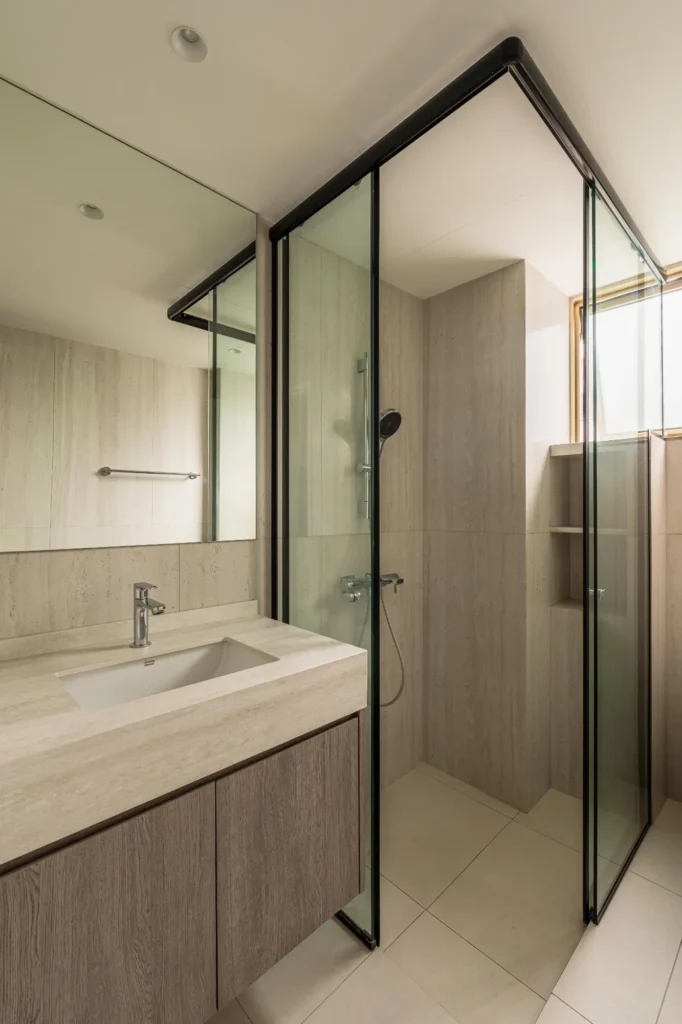
Wet and Dry Area Separation
Dividing your space into clear wet and dry areas is one of the most functional upgrades you can make. A glass shower screen or half-height partition keeps water contained in the shower area, keeping the rest dry, safe, and comfortable. Frameless clear glass shower panels eliminate visual barriers, making the room feel more expansive while allowing more natural light to pass through space. Sliding doors and walk-in showers can further optimise your layout and create a more open feel. This also extends the life of toilet fixtures and existing fixtures outside the dry zone.
Zoning with Fixtures and Finishes
Position the toilet bowl, basin, and shower in a logical flow. In a narrow HDB layout, placing the shower at the far end with a sliding glass door, the basin in the middle, and the toilet bowl near the entrance creates a natural sequence. Using geometric shapes or patterned finishes on one wall can modernise the appearance and subtly define zones without physical barriers. Replacing traditional swing doors with pocket doors can reclaim up to 10 square feet of usable area — a significant gain in a compact HDB toilet.
Making Small Bathrooms Feel Larger
Several strategies expand a small bathroom visually. Floor-to-ceiling surfaces eliminate horizontal break lines. A large mirror cabinet reflects light and doubles perceived depth. Recessed wall niches in showers, built-in vanity drawers, and mirrored cabinets keep essentials organised without consuming precious space. Maximise your bathroom space by utilising vertical storage, wall-mounted fixtures, and suspended vanities to clear the floor. Consistent flooring running from wet to dry zones creates uninterrupted visual flow — a technique we use in many of our design projects.
Waterproofing, Plumbing, and the Work You Don’t See
The most critical work happens behind the surfaces. Get this wrong, and no amount of beautiful finishes will save you.
Waterproofing: Singapore’s Non-Negotiable
Waterproofing is the foundation of every project in Singapore. Proper waterproofing is essential to guard against leaks and mould due to high humidity and daily water exposure. The Building and Construction Authority (BCA) requires systems to comply with SS 637 — the Singapore Standard for waterproofing of internal spaces. A proper application involves substrate preparation, primer, a minimum of three coats of cementitious waterproofing membrane, and upturns extending at least 300mm up the walls. A mandatory 48-hour water ponding test must be completed before surfaces are installed to ensure safety and avoid water damage to lower floors.
For HDB flats, remember the 3-year tile protection rule: new BTO owners cannot hack during this period without voiding the waterproofing warranty. After this period, hacking requires a permit. Our team handles all permit applications as part of our end-to-end service.
Stainless Steel Piping and Plumbing Works
Older HDB flats often have galvanised iron pipes that corrode over time. This is the ideal opportunity to install stainless steel piping, which resists corrosion in Singapore’s tropical conditions and lasts decades longer. The cost to install stainless steel piping is typically $450–$900 per unit depending on configuration, but it avoids corrosion issues and ensures reliable water pressure for years.
Electrical Work, Ventilation, and Lighting
Modern projects should address electrical work — proper placement of power points for bidet seats or electric attachments, and wiring for feature lighting. Installing a high-efficiency exhaust fan is critical for preventing moisture buildup in compact spaces; look for units rated at 50 CFM or higher to prevent mould growth effectively.
Layered lighting is essential for creating a versatile space. Combine ambient lighting for general illumination, task lighting at the vanity for grooming, and accent lights to highlight design features. Proper lighting ensures every area of the toilet is covered effectively, while also enhancing the mood and perceived size of the room.
Toilet Design Trends for 2026
At Lemonfridge Studio, we always advise choosing elements with timeless appeal rather than fleeting trends. Here’s what we’re seeing in 2026 that we believe will endure.
Warm Minimalism and Midimalism
Minimalism remains a popular choice in Singapore bathroom projects, especially for compact HDB homes and condos. But the trend for 2026 is leaning towards “Warm Minimalism” and “Midimalism” — a blend of minimalist layouts with maximalist textures. Think clean lines and decluttered surfaces layered with tactile materials like fluted panelling, ribbed glass, and natural stone. It’s the best of both worlds: calm spatial flow paired with rich sensory detail.
Industrial Chic Meets Warmth
The industrial chic look — exposed-finish surfaces, matte black fixtures, and raw concrete textures — continues to resonate with Singapore homeowners. The key to making this aesthetic work is balancing hard surfaces with warm elements: wood accents on vanity fronts, woven baskets for storage, and soft lighting. Using a monochrome palette can create a particularly sophisticated look. Adding a small plant or two brings a fresh, organic touch without a full redesign.
Smart Toilets and Integrated Technology
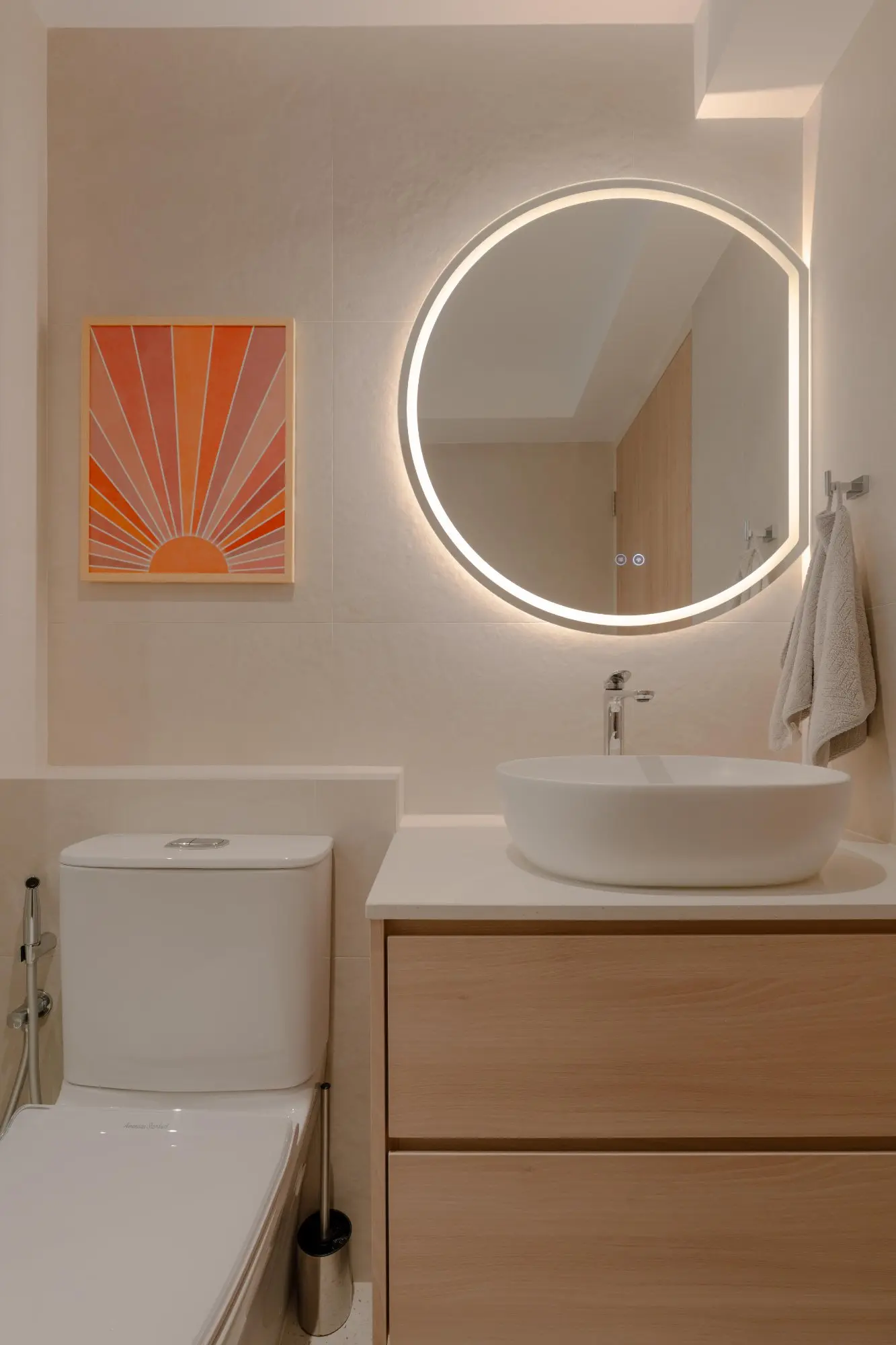
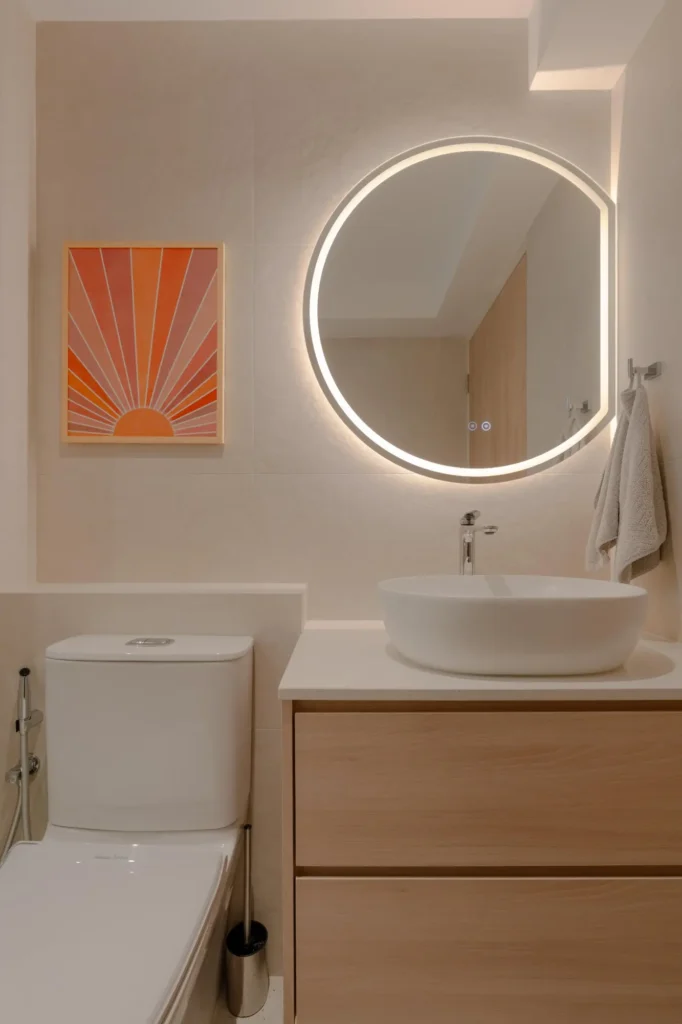
Smart toilet bowls with built-in bidets, adjustable hygiene settings, self-cleaning functions, and heated seats are gaining traction in Singapore homes. Integrating technology into these projects is becoming standard — sensor-activated taps enhance convenience and hygiene, while demister mirrors with LED lighting provide fog-free reflections and ambient illumination. They’re especially practical for renovating toilets in landed properties where space accommodates larger fixtures.
Sustainable and Low-VOC Materials
Sustainability is influencing choices across our projects in 2026. Low-VOC paints — many formulated with anti-mould properties for moisture-prone spaces — along with water-saving fixtures such as low-flow shower heads and dual-flush toilet bowls reduce environmental impact and utility bills. Recycled-content porcelain and bamboo-composite vanities offer eco-conscious alternatives. We source durable, repairable finishes — a philosophy aligned with Wabi Sabi design principles.
Floating Vanities and Open Storage
This vanity style continues to dominate toilet design in Singapore: they open up the visual plane, create storage solutions behind clean facades, and pair beautifully with both Scandinavian aesthetics and modern contemporary styles. Wall-mounted vanities also make floor cleaning far easier. Complement them with open shelving, recessed niches alongside the shower, and install large recessed or mirrored cabinets to enhance functionality. Purchasing distinctive fixtures — such as elegant marble countertops or gold-tone tapware — can further elevate the overall look.
The Complete Renovation Process: What to Expect
Understanding the process eliminates surprises. You should select a dependable designer or contractor who will be able to provide advice during the entire renovation duration. At Lemonfridge Studio, our end-to-end service covers every stage:
Consultation → Concept → Design Development → Carpentry → Installation → Styling → Handover
1. Initial Consultation (Week 1)
We visit your own home to assess the existing toilet condition, discuss lifestyle needs, and understand design preferences. For HDB units, we note layout constraints and identify any defects before work begins.
2. Design and Material Choices (Weeks 1–2)
Our team creates a detailed plan including layout, selections, fixture specifications, and a transparent quotation. You’ll see samples and 3D visualisations. Choosing finishes — from bathroom tiles to shower heads and vanity finishes — happens collaboratively. Changing even the colour of the fixtures can significantly improve the design and feel of the space.
3. Permit Application (1–3 Weeks)
For HDB works requiring hacking, we submit all required permits on your behalf. During this time, we finalise procurement so work can begin immediately upon approval.
4. Works Timeline (4–5 Weeks Typical)
The process for a toilet in Singapore typically spans four to five weeks. Here’s a typical schedule for an HDB toilet project:
- Demolition and hacking: 1–2 days
- Plumbing and piping upgrades: 1–2 days
- Waterproofing membrane application and curing: 3–5 days (includes ponding test)
- Wall and floor installation: 3–5 days
- Fixture installation (toilet bowl, basin, shower screens): 1–2 days
- Carpentry (vanity, storage): 1–2 days
- Finishing touches, accessories, and cleanup: 1–2 days
For a single unit, expect roughly 2–3 weeks of active works plus curing time. For dual projects, stagger the work so you always have one usable space — total duration is typically 4–5 weeks.
5. Quality Check and Handover
We conduct a thorough inspection covering alignment, grout integrity, fixture operation, and waterproofing verification. Our team walks you through every detail. See examples of completed transformations in our portfolio.
Costs in Singapore (2026 Guide)
Budgeting realistically is key to a smooth process. Costs can vary significantly based on the scope of work and materials chosen. Here’s what homeowners can expect:
HDB (per unit): Overlay $4,500–$6,500 | Hack-and-retile $7,000–$12,000 | Premium $12,000–$18,000
Condo: Standard $8,000–$15,000 | Premium $15,000–$25,000
Landed Property: Standard $10,000–$20,000 | Premium/en-suite $20,000–$35,000+
A typical package includes costs for hacking, tiling, plumbing, and fixtures. These ranges cover tiling, waterproofing, plumbing, fixtures, and basic carpentry. Additional costs may include permit fees ($50–$150), electrics, and shower screens. We recommend a 10–15% contingency for unexpected issues in older resale flats.
For wider budget planning, explore our guides for 3-room BTO, 4-room BTO, or resale ideas.
Before and After: Proof of Design Impact
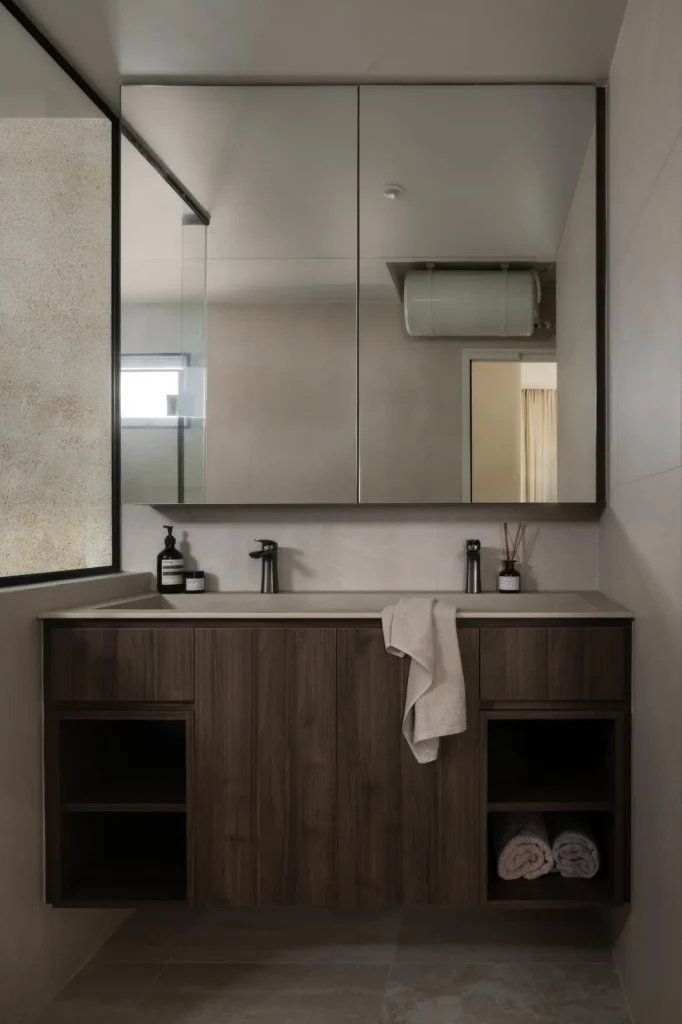
At a recent Hougang project, we took a dated HDB space with stained floor tiles, corroded piping, and a cramped layout, and transformed it into a modern bathroom with a floating walnut-toned vanity, dual basins with matte black fixtures, and floor-to-ceiling neutral surfaces that tripled the sense of space. The entire bathroom installation was completed in 12 working days.
At Oxford Road, a compact condo unit was reimagined with travertine-look surfaces, a frameless glass shower screen defining separate zones, and a custom wood-accented vanity with integrated storage. The result: a space that feels twice its actual size, with every fixture chosen to maximise comfort and longevity. Explore more in our marble showcase.
Key Factors When Selecting a Reliable Interior Designer
HDB Registration: Any renovation contractor working on HDB properties must be listed on HDB’s Directory. This ensures they meet minimum insurance, safety, and compliance requirements.
End-to-End Service: Choose a firm that handles design, permits, procurement, carpentry, and project management under one roof.
Portfolio Evidence: Ask to see completed projects — not just renders.
Transparent Pricing: A trustworthy renovation package quotation includes all line items with no hidden fees.
Lemonfridge Studio ticks every box. As an award-winning design firm, we bring in-house carpentry, dedicated project coordinators, and a portfolio spanning HDB upgrades, condos, landed properties, and commercial spaces across Singapore.
Ready to Transform Your Space?
Whether you’re planning a simple refresh for your HDB toilet or a complete transformation for your landed property, Lemonfridge Studio is here to guide you. Our team combines tailored design, premium finishes, and pragmatic project management to deliver results that reflect your personality and enhance your daily life.
Book your free consultation today — no obligation, no pressure, just honest guidance from a team that’s been redefining the art of living since 2016.
FAQs: Toilet Renovation in Singapore
An overlay-only package starts from approximately $4,500. Hack-and-retile packages for a standard HDB unit range from $7,000 to $12,000 including waterproofing, surfaces, and fixtures.
The renovation process typically spans four to five weeks, including permits and curing time. Coordinating a kitchen renovation simultaneously improves efficiency.
Yes — permits are required for hacking floor tiles or wall tiles, replacing waterproofing, relocating plumbing, and installing water heaters. Overlay and like-for-like fixture replacement do not need permits.
You can overlay on existing surfaces, but HDB enforces a 3-year protection period during which you cannot hack. Check our timing guide for details.
Non-porous porcelain with an R10+ slip rating is ideal for Singapore’s climate. It resists moisture, is easy to maintain, and comes in vast style ranges. Standard porcelain also performs well in dry zones.
Professional waterproofing with a cementitious membrane, applied in three coats with 300mm wall upturns, is essential. A 48-hour ponding test verifies integrity. Corrosion-resistant piping prevents issues at joints.
These free up area and simplify cleaning — ideal for smaller HDB units. They require a concealed cistern frame, so discuss feasibility with your design team during planning.
Warm Minimalism and Midimalism are leading the way — blending clean layouts with rich textures. Suspended vanity designs with wood accents, integrated bidet systems, industrial chic finishes, LED accent lights, and sustainable low-VOC materials are all popular. Scandinavian and Muji-inspired aesthetics remain in demand.
Focus on compact fixtures, suspended vanities, large-format finishes, a frameless shower screen for zone separation, and wall mounted shelves for storage solutions that preserve open area. Using mirrors to reflect light can also make a small bathroom look significantly bigger.
Working with an experienced design firm ensures cohesive design, proper permits, coordinated trades, and quality control. Schedule a consultation to explore your options.