Key Takeaways
- Plan smart home wiring during renovation so lighting, climate control and security systems can be integrated neatly from the start.
- Focus on practical automation by room, rather than adding gadgets that do not improve everyday living.
- For HDB flats, prioritise smart lighting, air-conditioning control, door access and security while keeping the system easy to use and upgrade.
Creating a smart home in an HDB flat is less about filling your home with gadgets and more about making everyday routines easier. The best smart home ideas are the ones you barely notice: lights that switch on when needed, air-conditioning that can be controlled remotely, and a smart lock that lets you enter your home without reaching for your keys.
For HDB upgraders completing a full renovation, this is particularly important. Smart home planning should happen alongside your electrical and renovation plans, rather than being treated as something to add after the home is completed. Running the right wiring and preparing power points early can make future installations cleaner, more reliable and less disruptive.
Here is a room-by-room guide to practical smart home ideas for HDB flats in Singapore.
Living Room in an HDB Flat: Smart Lighting and Climate Control
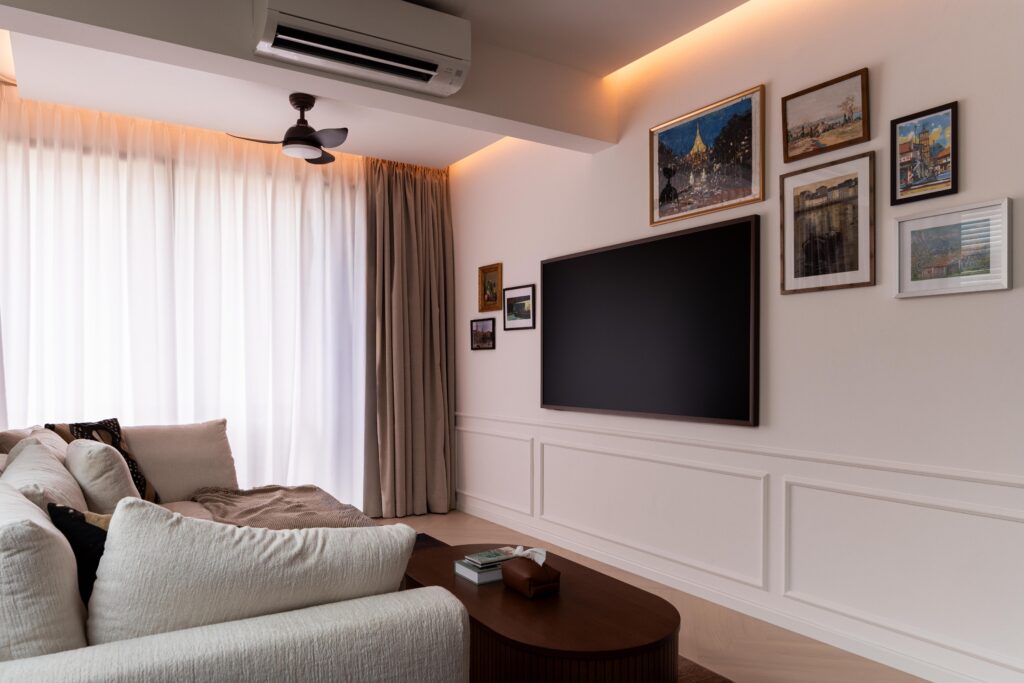
The living room is usually the heart of an HDB flat, making it a good place to start with smart home automation.
In addition to planning your smart lighting scenes, consider how the overall living room design in an HDB flat will work with switches, furniture placement and natural light. Smart lighting can create different lighting scenes depending on what you are doing, and stylish, integrated smart switches can help you control multiple circuits without cluttering the walls. Instead of manually switching individual lights, you could have a “movie” setting that dims the main lights, a brighter setting for entertaining guests, or an “away” setting that switches everything off when you leave.
When planning your renovation, consider how your lighting circuits will be arranged. Downlights, cove lighting, feature lights and lamps may eventually be controlled separately, so planning the electrical layout beforehand gives you greater flexibility.
Climate control is another practical addition. A smart air-conditioning controller can allow you to adjust your home’s temperature remotely or automate air-conditioning schedules. This can be particularly useful when you are coming home after work and want the living room to be comfortable before you arrive.
The goal is not to automate every switch. It is to make the things you already do regularly more convenient.
Bedroom: Comfort Without Overcomplicating Things
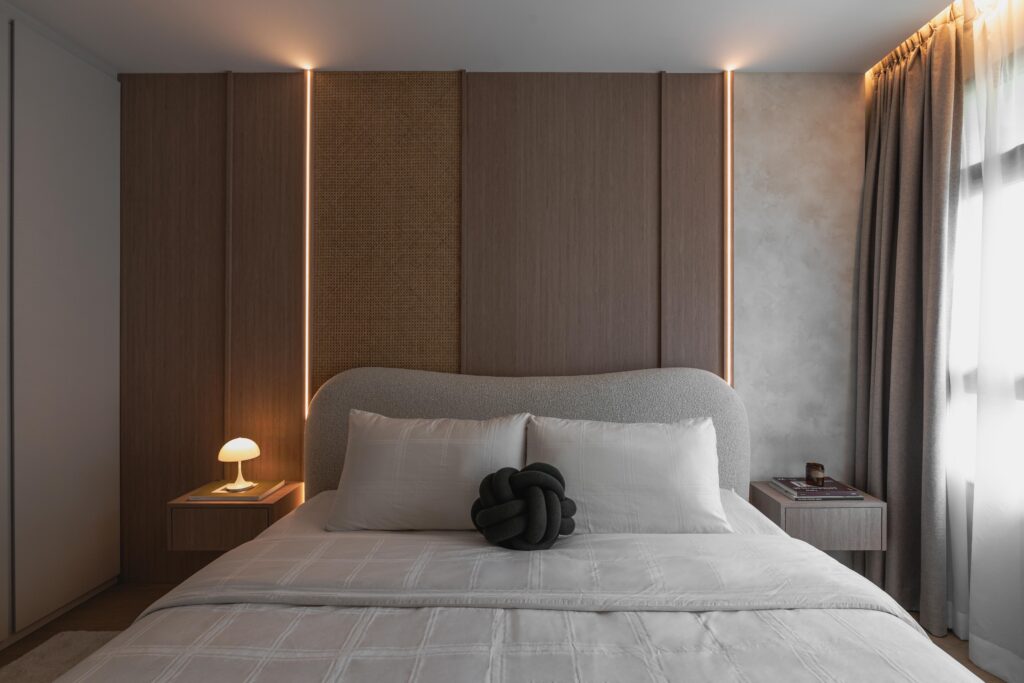
Bedrooms benefit from automation that supports comfort and routine.
For compact homes such as 2-room flats, combining thoughtful bedroom layout with simple 2-room HDB interior design can make it easier to position switches, controls and storage. Smart lighting can be programmed around your daily schedule. For example, bedside or ambient lighting can gradually turn on in the morning, while lights can automatically switch off at bedtime.
You can also consider integrating your bedroom air-conditioning with your smart home system. Instead of leaving the air-conditioner running unnecessarily, schedules can help manage when the room is cooled.
For couples, individual preferences are worth considering. A practical smart home setup should allow you to control lighting and climate easily without requiring complicated apps or multiple remotes.
For HDB upgraders, this is another reason to think about wiring before carpentry and ceiling works begin. It is much easier to plan switches, power points and control locations during renovation than to modify finished walls later.
Kitchen: Safety and Convenience First
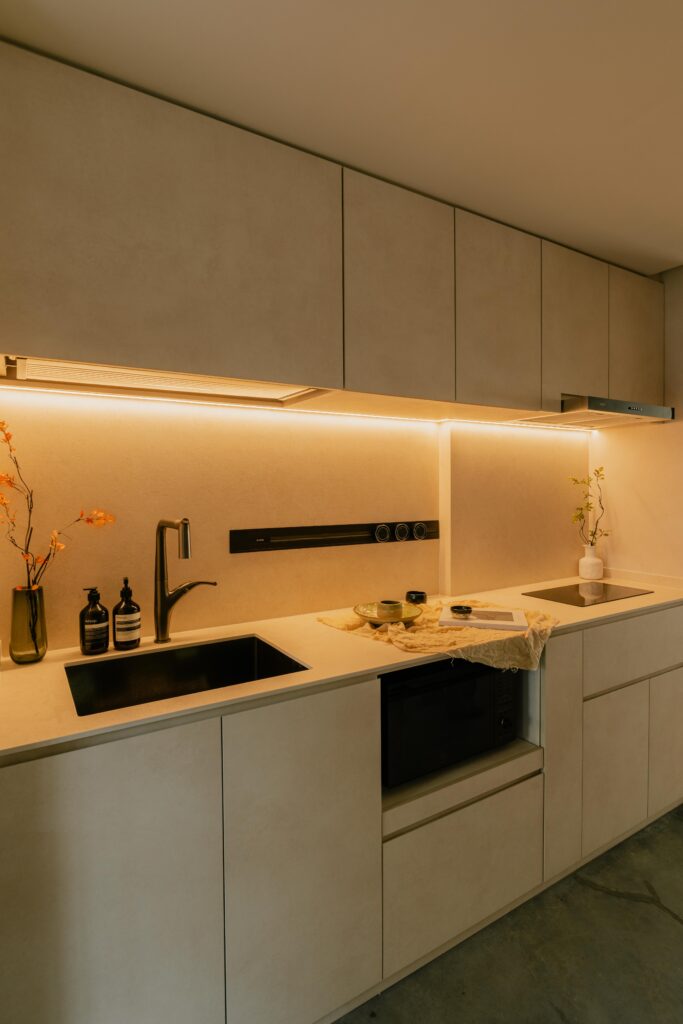
The kitchen does not necessarily need extensive automation. Instead, focus on convenience and safety.
Smart lighting can be particularly useful here. Under-cabinet lighting, for example, can illuminate work surfaces without requiring the main kitchen lights to remain switched on, and a well-planned kitchen renovation in Singapore can integrate these fittings neatly with cabinetry, power points and ventilation.
You can also consider motion- or presence-based lighting for areas where you frequently move between tasks. However, placement matters. You do not want lights switching off simply because the system fails to detect movement while you are cooking.
For appliances, avoid automating something simply because it can be automated. Prioritise functions that genuinely make your routine easier while keeping safety in mind.
During renovation, ensure that electrical points are planned around your kitchen layout and appliances. This creates a better foundation for future smart upgrades.
Bathroom: Lighting and Practical Automation
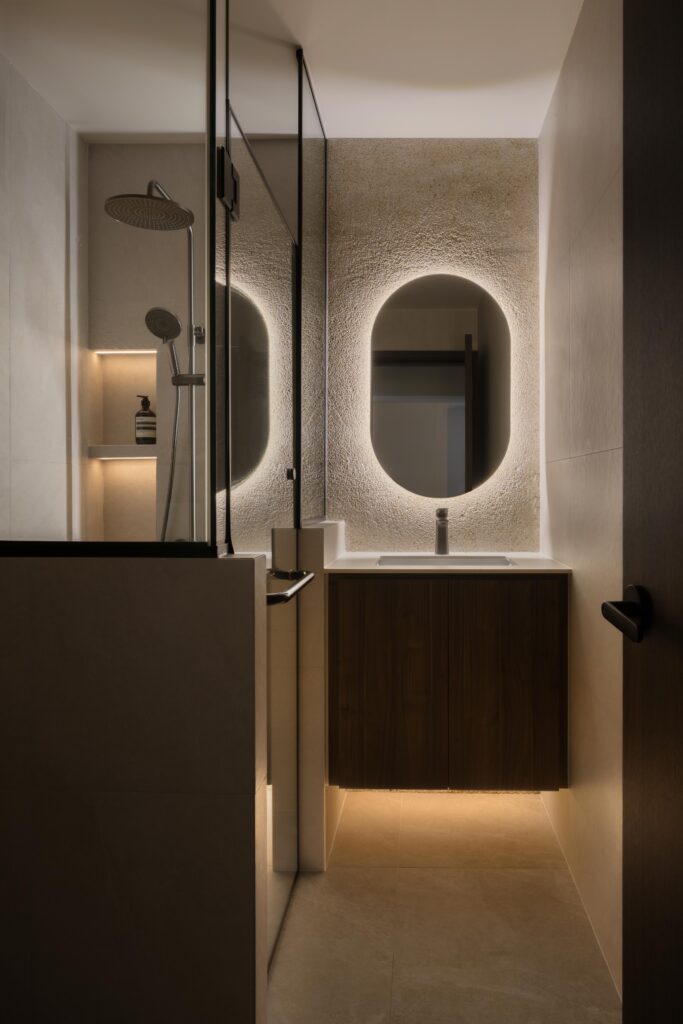
Bathrooms generally require a more straightforward approach.
Smart lighting can help create a more comfortable environment, particularly if you want separate controls for functional and ambient lighting. Motion-activated lighting can also be useful for nighttime visits, allowing you to avoid turning on bright overhead lights.
However, bathroom automation must account for moisture and electrical safety, and homeowners must obtain HDB renovation permits before starting bathroom modifications. If you plan to change bathroom finishes or the layout, apply for approval before work starts. Install all electrical and smart-home components appropriately for the environment and follow relevant safety requirements.
Rather than adding multiple connected devices, concentrate on lighting and controls that provide an obvious everyday benefit.
Entrance: Smart Lock and Home Security
For many HDB homeowners, the entrance is where smart home technology can provide one of the most noticeable improvements.
A smart lock can provide keyless access using methods such as a PIN, fingerprint, card or mobile device, depending on the model. This can be useful when you have your hands full, need to give temporary access to someone or simply prefer not to carry keys, and pairing it with well-designed HDB windows and grilles can further enhance both security and ventilation around the entrance.
However, choosing a smart lock is not just about the number of features.Consider your existing door compatibility, installation requirements, battery backup and access methods before choosing a smart lock. If you plan to replace the entrance door, check whether you need a permit based on its location, especially if it sits along a fire escape route. Before installation, check the relevant HDB permit or compliance requirements.
Security can also extend beyond the lock. Door sensors, video doorbells where appropriate, and other security devices can provide additional visibility over activity around your home.
For a renovation project, consider the entrance security setup early. A coordinated approach can help ensure that wiring, power requirements and door hardware work together instead of requiring retrofitting later.
Study or Work Area: Lighting That Works Around You
If you work from home, your study can benefit from relatively simple automation.
You can programme smart lighting around your working hours and adjust lighting scenes to provide brighter task lighting during the day and softer lighting after work.Thoughtful HDB study room design — including desk placement, storage and seating — also works hand in hand with where you position smart switches and task lights.
Climate automation can also help if your study is a separate room. Instead of cooling the entire home, manage the temperature only in the spaces you use.
This is particularly relevant for larger HDB flats, where room-by-room control can potentially provide more practical energy management than running everything simultaneously.
Utility Area and Common Spaces: Small Automations with a Development Board Matter
Not every smart home feature needs to be impressive. Utility areas and corridors can benefit from simple automation.
For smaller layouts, especially 2-room flexi flats, combining these small automations with flexible 2-room HDB design solutions can help corridors, household shelters and niches double as storage or utility zones. Motion-activated lights can be useful in corridors, entrances and less frequently occupied areas. This means lights do not need to remain switched on unnecessarily.
You can also use your smart home system to create an “away” routine that turns off selected lights and appliances when everyone leaves. A “welcome home” routine could then activate selected lights when you return.
These small automations can make a bigger difference to everyday convenience than adding another standalone gadget.
Why You Should Plan Smart Home Wiring During HDB Renovation
For HDB owners undergoing a full renovation, the biggest opportunity is planning the infrastructure before the finishing work begins.
Smart switches, lighting controls, sensors, security systems and other devices may have different power and connectivity requirements. Planning them early allows your electrician, interior designer and smart home installer to coordinate the installation as part of a broader home renovation plan for modern homes, and for any hdb renovation, homeowners should work with contractors listed in the HDB Directory. Understanding your HDB floor plan in detail also makes it easier to align wiring routes, switch positions and feature walls. Noisy renovation work is generally allowed Monday to Friday, 9am to 5pm, so planning and scheduling matter.
This can also help minimise visible cables and unnecessary devices. For homeowners who prefer a clean, minimalist interior, invisible technology is often more appealing than having gadgets scattered around the home.
For BTO first-timers, the approach can be scaled according to budget. You do not need to automate the entire flat immediately. Preparing the wiring and infrastructure for future expansion can allow you to add smart features gradually, and understanding HDB renovation timing and permit requirements helps you schedule this work without disrupting the overall project.
For condo owners and landed homeowners, the same principles apply on a larger scale, with greater opportunities to integrate lighting, climate control, access and security across multiple spaces.
Conclusion
The best smart home for an HDB flat is not necessarily the one with the most devices. It is one that fits naturally into how you live.
Start with the spaces where automation can provide genuine value: smart lighting in the living room and bedroom, climate control where it matters, practical kitchen and bathroom lighting, and smart locks and security at the entrance.
Most importantly, plan the system before your renovation is complete. Proper wiring and infrastructure can make your smart home cleaner, more reliable and easier to expand in the future.
Whether you are an HDB upgrader carrying out a full renovation or a first-time BTO owner looking to future-proof your home, a well-planned smart home should make everyday life simpler, not more complicated.
For homeowners looking to plan an integrated smart home as part of their renovation, Lemonfridge can help bring the different elements together from the planning stage.
FAQs
For most HDB homes, with HDB referring to the Housing & Development Board, smart lighting, air-conditioning control, smart locks and basic security are practical starting points. It is Singapore’s national public housing authority, and its housing system includes HDB flats where around 80% of the resident population lives. These features can improve convenience without requiring extensive automation throughout the entire home.
It is best to plan smart home wiring during the renovation stage. For new flats, homeowners generally need to complete renovation within 3 months. HDB also requires permits for wall removal or alterations, so decide on wiring routes and layout changes early based on how you build the flat. Plan electrical points, switches, lighting circuits and other infrastructure before completing walls, ceilings and carpentry to reduce disruptive retrofitting later.
A smart lock can work well in an HDB flat, but check compatibility with your existing door and lock configuration first. If you plan to replace the main entrance door, check whether you need a permit, especially along fire escape routes. Homeowners should also consider access methods, battery backup, security features and installation requirements before choosing one.
No. A smart home can be introduced in stages. If renovating, prepare wiring and infrastructure first, then check whether you need permits before hacking or altering walls. Then add smart lighting, climate control or security features according to your priorities and budget.
There is no fixed amount. A practical setup should automate repetitive tasks that genuinely improve convenience, comfort or security. For many homeowners, controlling lighting, air-conditioning and home access is more useful than automating every appliance.