

Key Takeaways
- Warm minimalism beats cold white: Greige walls, textured surfaces and rounded edges update classic Nordic style.
- Climate-smart equals comfort: Cross-ventilation, reflective finishes and Matter-ready lighting keep flats cool and efficient.
- Smart storage is king: Hidden pantries, flip-down desks and pull-out beds make every square metre count.
Stepping through the front door, do you feel an instant sense of well-being—or a rush of visual noise? A thoughtfully detailed Scandinavian interior turns even the most compact HDB into a quiet refuge, and that serenity is more than a passing trend. Below, I map out everything Singapore homeowners need to know in 2025, from climate-smart layouts to warm-lighting tricks, wrapped in the understated elegance that defines Nordic living.
1. A Singaporean Affair with Scandinavian Interior Design
Many homeowners are still searching “scandinavian interior design” every month—and for good reason. The Scandinavian interior route because muted neutrals, large windows and clean lines make the living space feel calmer after a long commute. This blend of practical beauty and timeless appeal keeps the style firmly on top of local trend charts.
2. Warm Minimalism: The Scandi 2.0 Evolution
Classic white-on-wood has softened into “Scandi 2.0”. Think greige walls, textured lime-wash, and rounded edges that add warmth without unnecessary clutter. The shift maintains a neutral colour palette yet swaps starkness for gentle, earthy notes—perfect for modern homes craving a cosy but airy interior.
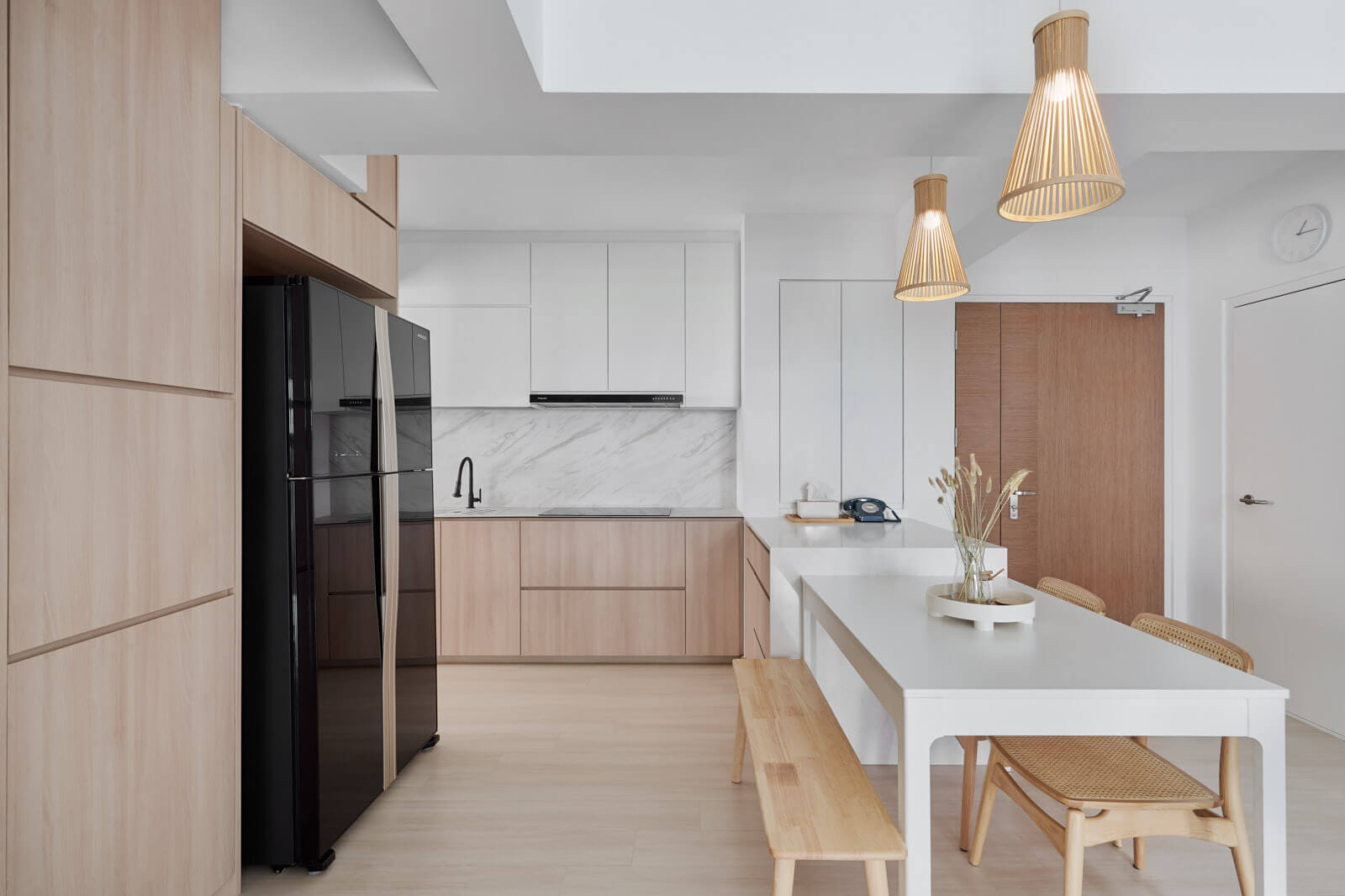
Light timber and muted tones ground the room; texture gives it heart.
Curious how the Japanese philosophy tempers Nordic restraint? Our primer on the Japandi fusion of styles shows why hybrids are trending in studio apartments.
3. Climate-Smart Design: Cooling Without Compromise
Academic studies confirm that cross-ventilation and high-reflectance roofs can cool flats by 2–3 °C. When we pair those principles with Scandinavian design strategies—straight lines that channel airflow, reflective surfaces near large windows, and slim ceiling fans—the result is a functional space that feels fresh year-round.
3.1 Harnessing Natural Light in Compact Flats
- Sheer curtains filter glare while letting natural light bathe the room.
- Maximise natural light further by aligning furniture perpendicular to the windows.
- Use pale terrazzo floors or light vinyl to bounce daylight deeper inside.

4. The Neutral Colour Palette That Never Feels Cold
A low-contrast spectrum of taupe, oatmeal and chalk greige replaces clinical white walls. Pair them with FSC-certified oak panels to add warmth and echo Nordic forests—proof that incorporating natural materials need not sacrifice sophistication. For colour guidance, bookmark this gentle walkthrough on balancing Scandinavian hues.
5. Key Elements: From Clean Lines to Rounded Edges
The style’s key elements remain:
- Clean lines and straight lines for visual order
- Soft throws and boucle cushions for natural textures
- Matte brass or black metallic accents for striking contrast
- Sculptural floor lamps and halo pendants for warm lighting
- Subtle curves on cabinets for a gentle, understated elegance
These design elements prove that Scandinavian interior design is more about balance than dogma.
6. Natural Materials for Tactile Warmth
Light oak, ash, rattan and linen anchor a Scandinavian style home. Handcrafted ceramics and potted plants add textural depth, while hardy quartz counters stand up to chilli-crab splatters. The ratio of raw timber to stone keeps the overall aesthetic organic yet resilient.
Quick tip: Position indoor plants near reflective surfaces to amplify greenery without crowding the footprint.

7. Storage-Rich HDB Layouts
High-density cities demand functional layouts. Hidden tall-unit pantries, flip-down study desks and pull-out beds that slide into shallow recesses—proof that Scandinavian interior design ideas thrive on smart carpentry. For deeper inspiration, explore our guide to space-saving Scandinavian HDB planning.
8. Cost Breakdown for 2025 Renovations
| Flat Type | Typical Budget (SGD) | Notable Upgrades |
|---|---|---|
| 3-room BTO | 36 k – 44 k | Vinyl flooring, ready-made storage |
| 4-room BTO | 51 k – 62 k | Custom kitchen, oak laminates |
| 5-room BTO | 67 k – 82 k | Full-height wardrobes, smart hub |
| Condo 1 000 ft² | 90 k – 110 k | Marble counters, branded fittings |
Carpentry remains 30–40 % of spend, so value-engineering those bespoke wardrobes pays off. Keep a 12 % contingency fund to buffer labour fluctuations.
9. Smart Tech Meets Scandinavian Style
Matter-ready switches, circadian lighting presets and air-quality sensors integrate invisibly into minimalist ceilings. Voice-controlled track lights adjust warm lighting from dawn to dusk, maintaining a consistent neutral colour palette and supporting occupant well being.
10. Lighting: Sheer Curtains, Track Lights and Warm Glows
Layer lighting in three tiers:
- Large windows plus sheer curtains for daylight
- Dimmable pendant halos over the dining table and coffee table
- Discreet floor lamps for after-hours ambience
For fixture ideas, scroll through our curated Scandinavian lighting guide.
11. Textured Surfaces for Visual Interest
Lime-wash, micro-cement and fluted oak panels provide visual interest without dominating the sense of space. Rounded plaster corners prevent harsh shadows and echo the smooth pebbles of Nordic riverbeds.
12. Dining Tables and Coffee Tables That Anchor the Room
A solid-timber dining table (1.8 m for five-seat layouts) and a slim, oval coffee table ground the living room. Choose hardwood flooring beneath to frame each element and keep traffic lines clear. Need cabinetry ideas? Our minimalist Scandinavian guide shows how to hide appliances behind calm oak façades.

13. Scandinavian Interior Design Ideas for Small Living Rooms
- Opt for minimalist furniture on tapered legs to reveal more floor.
- Use neutral hues on upholstery to maintain airy spaces.
- Float storage space along one wall; keep the opposite side open to potted plants.
- Introduce soft throws in muted tones for a dose of comfort.
Further sketches await in our blueprint for cosy Scandinavian living rooms.

14. Sustainability at the Core
PEFC timbers, low-VOC lacquers and energy-saving LEDs reflect Scandinavian design principles centred on stewardship. For broader context, explore the Nordic design heritage that inspires our sourcing policies.
15. Case Spotlight: The Bidadari 3-Gen Flat
Walls were removed to create an L-shaped living space where grandparents, parents and toddlers share daylight from a single glazed façade. A concealed sliding panel returns privacy on demand. Watch the walkthrough on our site and notice how large windows, white walls and light rattan form a cohesive Scandinavian theme.
16. Maintenance Hacks for Singapore Humidity
- Anti-mould coats behind wardrobes
- Daily cross-ventilation through tilted casement panels
- Micro-fibre cloths on hardwood flooring to prevent water rings
- Citrus-oil sealant on oak to preserve natural textures
When wet zones need attention, our guide to crafting a Scandinavian bathroom sanctuary details grout choice and ventilation tricks.
17. Questions
Q: Can a 3-room HDB manage a full Scandinavian look?
A: Absolutely—focus on light timber vinyl, clever storage and a slim dining table.
Q: How do I choose the right sheer curtains?
A: Opt for polyester-linen blends; they drape well and dry fast in humid air.
Planning a galley cook-space? Our Scandinavian kitchen tips cover hood placement and terrazzo backsplashes.
18. Next Steps Toward Your Scandinavian Home
Ready to trade chaos for calm? Fill out our short lead form and a project planner will call within one business day. You’ll receive a personalised mood board, detailed cost plan and timeline—no obligation, just clarity. For bedtime inspiration tonight, see how a Scandinavian bedroom retreat layers muted linen and low-glow lamps for deeper rest.
Scandinavian Interior Design FAQ
What is the Scandinavian interior design style?
Scandinavian interior design is a minimalist design style that originated in the Nordic countries (Denmark, Sweden, and Norway) in the 1930s and gained worldwide popularity in the 1950s. It is characterized by simplicity, functionality, and a warm decorating style that combines whites, neutral colors, and natural woods. The style emphasizes clean lines, uncluttered spaces, and natural light to create cozy, bright interiors that promote well-being. Central to Scandinavian design is the Danish concept of “hygge,” which embodies comfort, calmness, and sociability. This style bridges the gap between minimalism and functionality while maintaining a connection to nature and prioritizing sustainability.
What is the difference between Scandinavian and Nordic décor?
While these terms are often used interchangeably, there are subtle differences between Scandinavian and Nordic design. Scandinavian design refers specifically to designs from Norway, Sweden, and Denmark, while Nordic design encompasses these countries plus Finland and Iceland. In terms of style, Scandinavian design leans toward sleek, modern minimalism with functionality as its primary focus, while Nordic design is more homely and influenced by traditional workmanship and crafts. Nordic design allows for more warmth and playfulness compared to strict Scandinavian design principles, embracing bolder accents and stronger contrasts. Nordic design has a more modern twist, often incorporating industrial elements, deeper color accents like charcoal or navy, and more personality through statement pieces.
What are the colors of Scandinavian interior?
Scandinavian interiors are defined by their use of neutral colors and a limited color scheme. The primary colors include various shades of white, creams, beiges, grays, pale blues, soft pinks, and muted greens. Walls are typically white or light-colored, with soft off-whites and cream tones enhancing the bright and airy feel. The color palette comprises light and soft natural shades such as cold and warm greys, often softened by subtle aqua and nude tones. Popular accent colors include blush and gray-blue, which add subtle depth without overwhelming the space. Recent trends show a shift toward “Scandi 2.0” with warmer tones like sage green, taupe, and soft olive tones alongside the traditional whites and grays.
Which elements are commonly found in Scandinavian interior design?
Common elements in Scandinavian interior design include clean lines and simple forms, natural materials (especially wood, stone, leather, and wool), neutral color palettes, functional furniture, and abundant natural light. The style emphasizes bringing nature indoors through natural materials and plants. Key textural elements include wool and sheepskin throws, blankets, and cozy textiles that add warmth and comfort. Storage solutions that double as decorative elements are fundamental to the style. Large windows and light-colored curtains maximize natural light, while organic shapes and references to Nordic history and lifestyle are prevalent. The design philosophy prioritizes simplicity, functionality, and sustainability, with every piece serving a purpose.
Is Scandinavian design expensive?
Scandinavian furniture can be expensive due to high-quality craftsmanship, sustainable practices, use of premium materials, and timeless designs that prioritize longevity. However, the cost depends on the quality and source of the pieces. Authentic Scandinavian designer pieces command premium prices, with some vintage items selling for tens of thousands of dollars at auction. However, achieving a Scandinavian look doesn’t have to be expensive. The style’s emphasis on minimalism means fewer items are needed, and many affordable options are available through retailers. The key is to focus on quality over quantity and invest in well-made pieces that will last for decades, making them cost-effective in the long run. DIY projects and second-hand shopping are also popular ways to achieve the look affordably.
What is the Scandinavian modern interior design?
Scandinavian modern interior design emerged in the 1950s and 1960s as a response to the functionalist movement, aiming to create designs that were both aesthetically pleasing and practical for everyday living. It is characterized by clean lines, functionality, and a strong connection to nature. Key elements include clean lines with sleek, minimalist profiles, natural materials (especially wood), functionality without sacrificing aesthetics, and neutral color palettes inspired by natural landscapes. This style prioritizes comfort and usability while maintaining an overall sense of openness and airiness. Scandinavian modern design continues to influence contemporary interiors with its emphasis on simplicity, natural materials, and understated beauty.
Can you mix Scandi and Modern?
Yes, Scandinavian design can be successfully mixed with modern and contemporary styles. The key is maintaining balance and respecting the scale of different pieces. Scandinavian furniture pairs well with modern design due to their shared emphasis on functionality and clean lines. When mixing styles, it’s important to create a single focal point, maintain proportionate elements, and ensure all pieces complement each other Scandinavian design’s neutral palette and natural materials make it an excellent foundation for incorporating modern elements like geometric patterns, bold artwork, or contemporary lighting fixtures. The goal is to create a harmonious blend rather than a clash of styles
For expert Scandinavian interior design services in Singapore, Lemonfridge specializes in creating authentic Nordic-inspired spaces that blend functionality with timeless elegance, perfectly adapted for tropical living.


