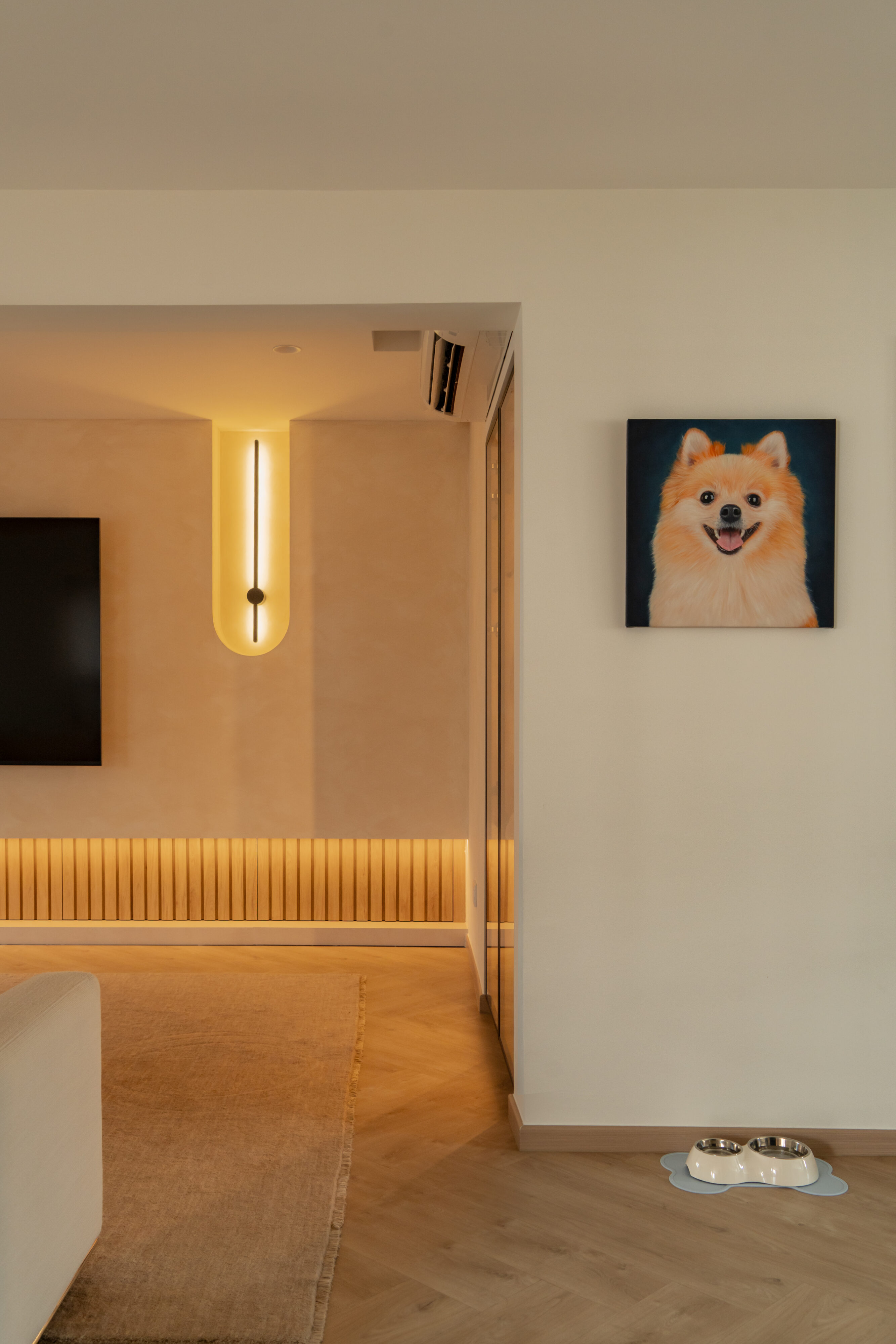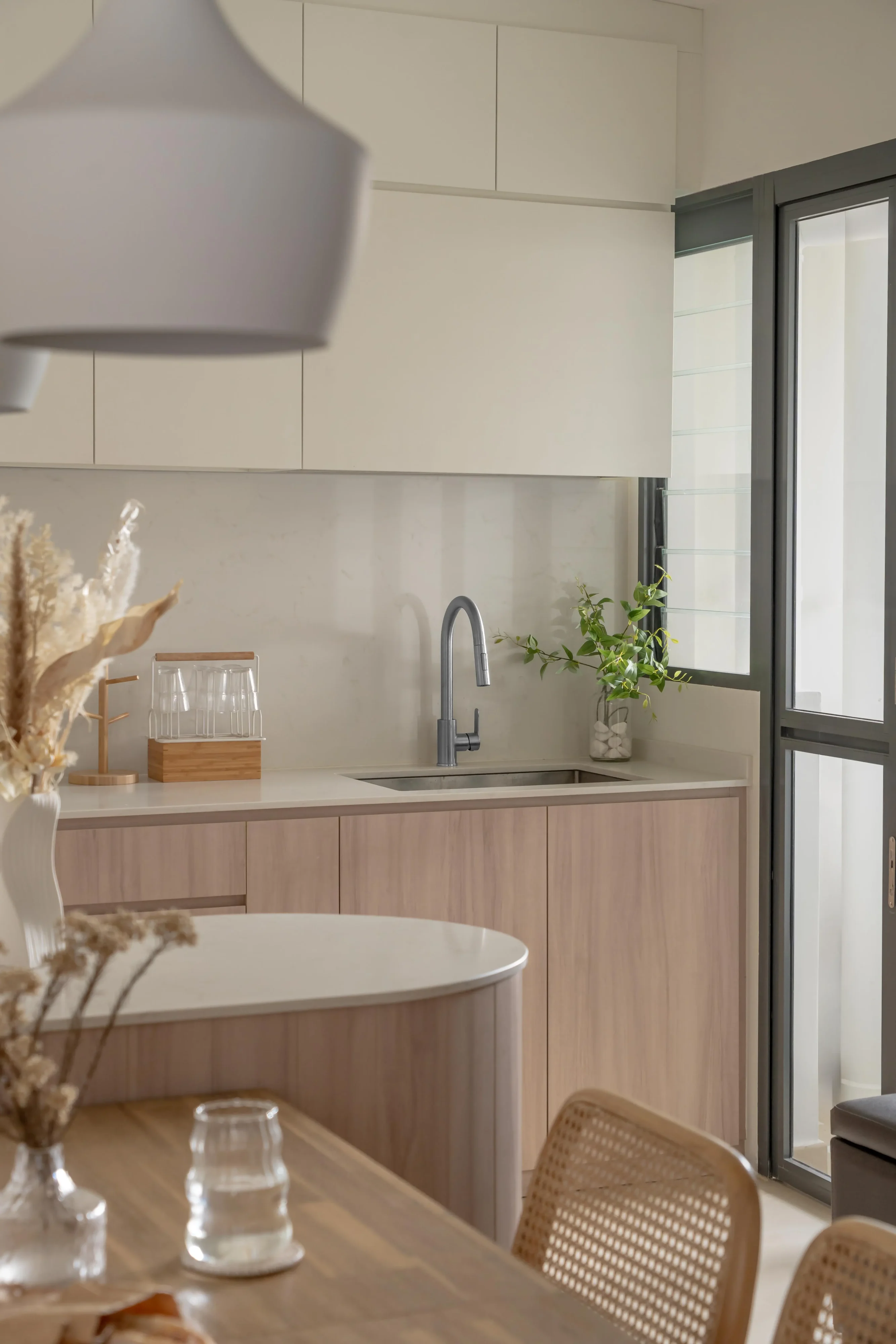
Key Takeaways
- Balance warmth and contrast through deeper tones, layered materials, and intentional lighting
- Treat storage, layout, and technology as integrated parts of the overall design, not afterthoughts
- Use natural materials like wood, stone, linen, and ceramics, and incorporate earthy tones such as soft beige, oatmeal, and muted greens to create a calming, harmonious environment
What Makes Modern Japandi Different Today
Japandi interior design blends Japanese minimalism with Scandinavian warmth, focusing on simplicity, function, and natural materials to create calm, purposeful spaces. Rooted in shared values of craftsmanship and balance, it draws from wabi-sabi’s appreciation of imperfection and hygge’s sense of comfort.
Today, modern Japandi is more expressive and design-led. It embraces deeper contrasts, sculptural furniture, and stronger architectural elements—favoring fewer but more impactful pieces. The result is a refined, contemporary space that feels both calm and confidently curated.
Elevated Color Palettes Beyond Neutrals
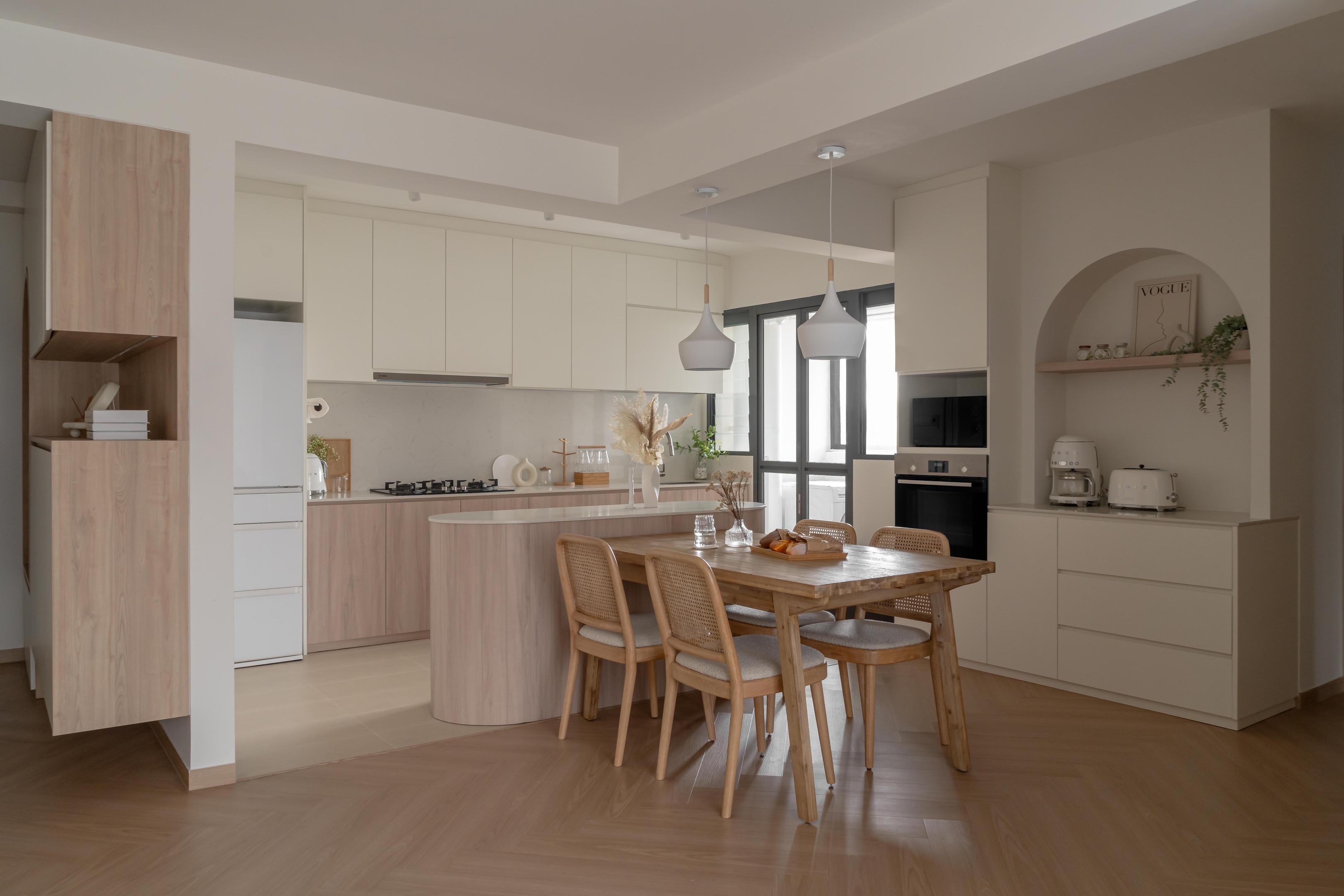
While beige, cream, and soft greys still anchor the palette, modern Japandi interior design is defined by earthy tones, warm whites, and muted greens, with off white often used as a calm, minimalist base. These shades—rooted in warm neutrals like soft beige, oatmeal, mushroom, oat, and ash grey—create a soothing, harmonious environment. Muted greens serve as subtle, nature-inspired accents, while earthy tones and warm whites contribute to a balanced, inviting feel.
Natural textures such as bouclé, linen, and raw ceramics further enhance the Japandi palette, adding organic depth and tactile interest that reinforce the calming effect of the design.
A practical approach is to maintain a 70–20–10 balance. Keep 70% in soft neutrals, layer 20% with mid-tone earthy hues like taupe or warm grey, and use 10% for darker accents such as espresso wood or blackened metal. This prevents the space from feeling flat while staying cohesive.
Avoid overly cool whites or stark contrasts. Opt for warmer undertones to preserve the calm, grounded atmosphere.
Material Pairing Strategies for Depth and Contrast
The most refined Japandi interiors rely on thoughtful material tension, with a strong emphasis on natural materials such as wood, stone, linen, ceramics, and cotton. These elements not only add depth and character but also contribute to the sustainability and durability of the design. Pair smooth with textured, light with dark, and organic with structured. For example, combine honed travertine with brushed oak, or linen upholstery with a sleek powder-coated steel frame. Well-crafted furniture and decor, showcasing craftsmanship and attention to detail, are essential for achieving the authentic Japandi look.
Wood remains central, especially in light wood tones like pale oak, which create a bright, airy foundation typical of Scandinavian minimalist interiors and Japandi spaces alike. Mixing different wood tones—such as oak, maple, and walnut—adds harmony and grounds the space. Incorporate natural textures, like limewash walls, boucle fabric, cotton textiles, or handmade ceramics, to introduce visual and tactile interest and soften harder surfaces.
A useful guideline is to limit your core materials to three or four per space, then repeat them consistently. This keeps the design intentional rather than scattered and closely aligns with minimalist interior design principles.
Furniture Selection and the Role of Negative Space
Furniture in modern Japandi is less about quantity and more about silhouette. Clean lines define Japandi furniture, creating a calm, uncluttered look that enhances the sense of serenity in the space. Low-slung sofas, platform beds, and clean-lined dining tables establish the visual rhythm, while pieces should feel grounded and proportional to the room.
Japandi interiors embrace a lived-in quality, where spaces are meant to feel welcoming and authentic, not overly pristine. Negative space is treated as a design element, not an absence, which is especially important in serene minimalist living rooms. Drawing from the concept of ‘ma’, intentional breathing room is left between objects to avoid overcrowding and to let each piece stand out. Instead of filling corners, let them remain open or anchor them with a single sculptural object.
When selecting furniture, prioritize craftsmanship and form. Opt for pieces with built-in storage, hidden storage compartments, or deep drawers to maximize functionality and maintain a minimalist aesthetic. A well-designed chair or table can act as both functional and artistic focal point.
Lighting as a Core Design Element
Lighting in modern Japandi goes beyond function—it shapes mood and texture. Maximizing natural light is fundamental in Japandi interiors, as it enhances the warmth and calmness that define the Scandinavian-Japanese design aesthetic and echoes Scandinavian interior design in Singapore. Floor-to-ceiling windows or large openings are often used to flood spaces with daylight, creating a serene and inviting atmosphere. Soft, diffused lighting is essential, but layering is what elevates the space. Combine ambient lighting with subtle task and accent lighting to create depth.
Japandi Layout Principles for Modern Homes
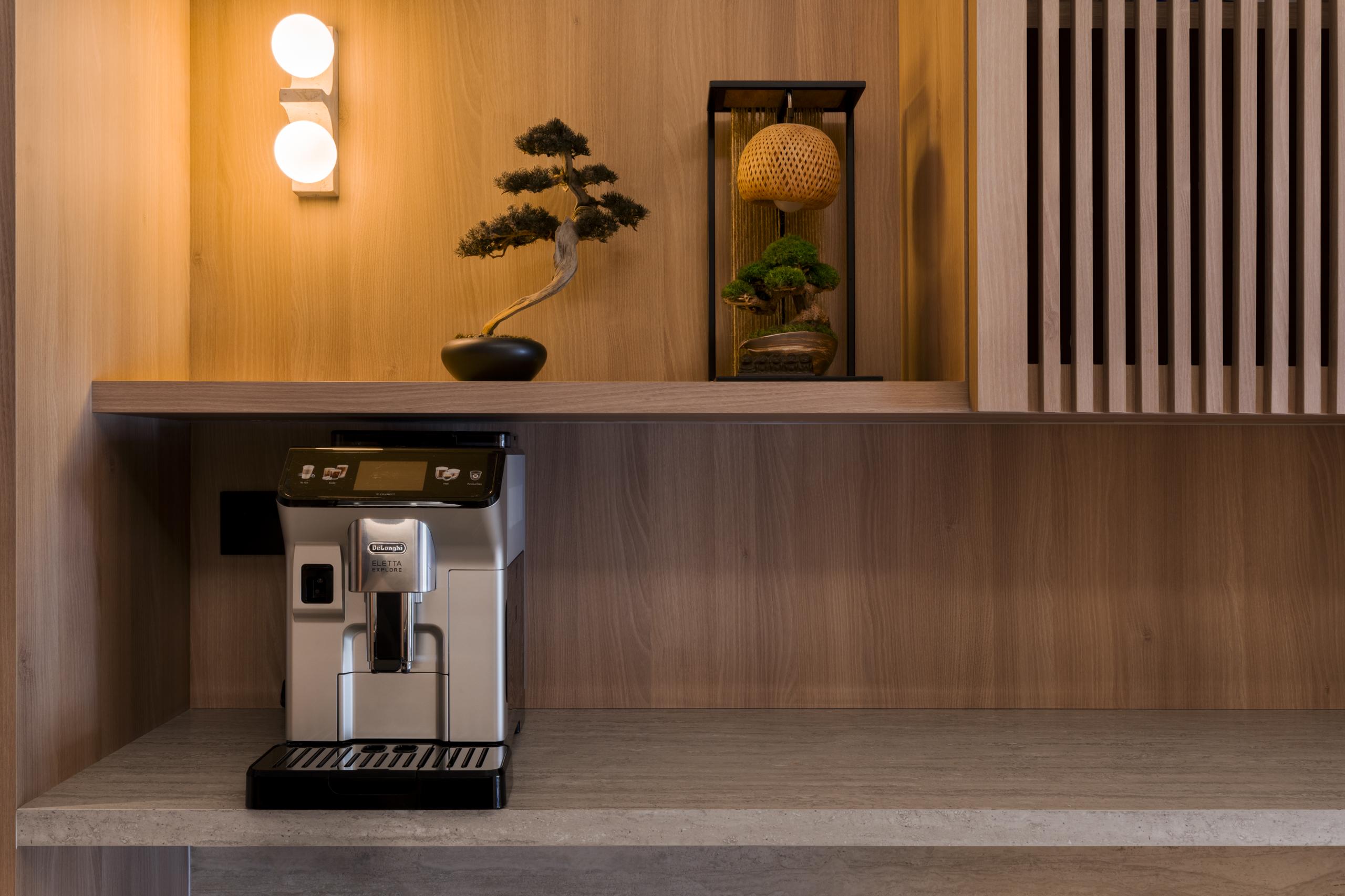
Modern Japandi layouts prioritize open spaces to create a sense of flow and serenity, while still maintaining clear zoning. Use furniture placement, rugs, or subtle level changes to define areas without adding physical barriers.
Japandi principles can be applied across different areas of the home to create spaces that are calm, functional, and inviting, much like Muji-inspired interiors for Singapore homes. Keep pathways unobstructed and prioritize symmetry where possible. A balanced layout naturally feels calmer and more intentional. In smaller homes, multi-functional zones—such as a dining table doubling as a workspace—are integrated seamlessly.
The key is clarity. Every zone should have a purpose, and transitions between them should feel effortless.
Styling Without Clutter
Styling in Japandi is about editing. Decorative objects are used sparingly, but each piece carries visual weight, similar to how Scandinavian interior design in Singapore relies on a few considered accents rather than heavy decoration. A single ceramic vase, especially when used to hold indoor plants, adds texture and depth to the decor. Incorporating bonsai trees or sculptural branches is a nod to the Japanese side of Japandi style, bringing nature indoors in a purposeful way. Greenery is used sparingly—often just one bonsai tree or a simple branch—contributing to a lived-in, authentic atmosphere that feels warm and welcoming rather than overly pristine.
Group items in odd numbers and vary heights to create subtle interest. Keep color palettes consistent with the overall scheme to avoid visual noise.
If something doesn’t serve a purpose—either functional or aesthetic—it doesn’t belong. This discipline is what keeps the space refined rather than sparse.
Storage and Hidden Functionality
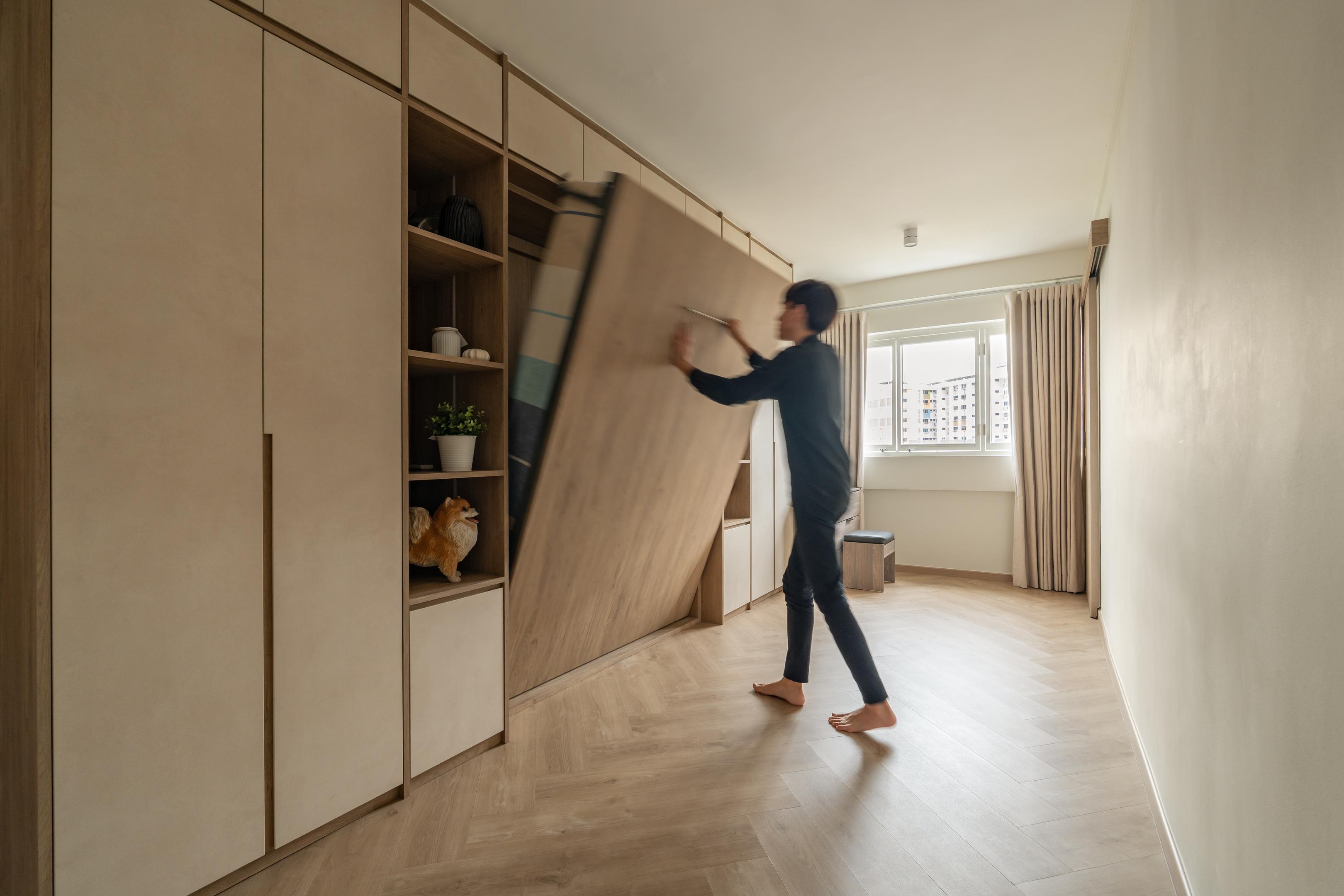
Seamless storage is essential to maintain the clean aesthetic. Built-in storage, including hidden storage solutions such as deep drawers, built-in cabinetry, concealed compartments, and flush finishes, helps maximize space efficiency and reduce visual clutter.
Handleless cabinets, sliding panels, and integrated shelving systems are commonly used. In living areas, opt for closed storage with minimal open shelving to avoid overexposure of items.
Think of storage as part of the architecture, not an afterthought. When done well, it disappears into the background while supporting daily living.
Applying Modern Japandi Across Different Rooms
In a Japandi living room, start with a strong anchor piece like a low-profile sofa, complemented by a woven rug to add texture and a lived-in feel. Incorporate natural materials such as wood, linen, and ceramics throughout the space to create warmth and authenticity. Choose furniture that serves a purpose beyond aesthetics, like a coffee table with hidden compartments or a sofa bed for guests, promoting both comfort and functionality.
For a Japandi bedroom, emphasize simplicity and serenity with low beds, woven rugs, and uncluttered decor. Use natural materials—think cotton bedding, warm wood tones, and soft, diffused lighting—to foster a calm, restful atmosphere.
Kitchens in Japandi interior design emphasize functionality and workflow while minimizing visual clutter. Opt for matte and durable wood cabinetry to maintain a clean, functional aesthetic, and integrate appliances seamlessly. Bathrooms often feature stone, wood accents, and simple fixtures, emphasizing a spa-like calm.
Consistency across rooms is key, but allow slight variations in tone or material to give each space its own identity, especially if you’re introducing modern luxury interior design elements into a Japandi scheme.
Common Mistakes to Avoid
One common issue is making the space too sterile, which misses the essence of Japandi interior design. Instead, aim for a lived-in, timeless look by incorporating textures, personal touches, and subtle imperfections that add warmth and authenticity. Over-reliance on white and lack of texture can strip the design of character. Another mistake is mixing too many wood tones without intention, leading to visual inconsistency.
Avoid over-decorating in an attempt to “complete” the space. Japandi thrives on restraint, and adding too much defeats the purpose.
Lastly, poor lighting can flatten the entire design. Even the best materials will fall short if not properly illuminated.
Practical Next Steps
Modern Japandi is less about strict rules and more about deliberate design decisions. Focus on how textures, color palettes, and furniture work together to create a cohesive, balanced space. Prioritize contrast, material quality, and spatial clarity—not minimalism alone.
Start by refining your palette, then reassess furniture and layout. Edit intentionally, invest where it matters, and let negative space elevate the design. Lemonfridge Studio apply these principles to craft interiors that feel both calm and functional.
Frequently Asked Questions for Modern Japandi Interior Design
Introduce darker accents, cleaner lines, and more sculptural furniture while maintaining a restrained palette. This approach updates the style while preserving the balance between Japanese design’s minimalism and Scandinavian style’s cosy simplicity.
Yes, but limit the range and repeat them consistently to avoid visual clutter. Both Japanese interiors and Scandinavian interiors often feature natural wood, so keep the palette harmonious for a cohesive Japandi look.
Layer warm, diffused lighting and avoid harsh overhead fixtures. This echoes the soft, inviting atmosphere found in Scandinavian interiors and the tranquil mood of Japanese interiors.
Yes, its focus on simplicity and functionality makes it ideal for compact homes. The style draws from Japanese design’s efficient use of space and Scandinavian style’s airy, uncluttered layouts.
Incorporate warm tones, textured materials, and soft lighting. Emphasize cosy simplicity by blending Scandinavian interiors’ warmth with the calm restraint of Japanese interiors.